
Hi, I’m Andy Baio (pronounced “bay-oh”). I make things on the internet, and occasionally off of it. Here’s a short bio:
Andy Baio is a writer and technologist in Portland, Oregon. He co-founded XOXO, an experimental festival for independent artists who live and work online, and has written about internet culture on his blog, Waxy.org, for over 20 years. Previously, he created Skittish, a playful virtual event space, made the collaborative event calendar Upcoming.org, and helped build Kickstarter as a long-time advisor and its first CTO.
There’s more on my Wikipedia entry, but it’s more of an odd jumble of factoids than a biography. I’m not allowed to edit it, but you’re welcome to!
You can follow me on Bluesky and Mastodon, the only two social media apps left that I’m comfortable using.
Here’s some more about me and my projects.
Waxy.org

Launched in 2002, Waxy.org is my personal sandbox — a place for my writing, research, and explorations of the web. Frequent topics include internet culture, copyright and fair use, online community, independent and experimental media, and the intersection of art and technology.
In the process, I’ve occasionally found myself in the news. I found (and named) the Star Wars Kid, coined the “supercut” genre of videos, was the first to put Danger Mouse’s Grey Album on the web (and first to be cease-and-desisted for it), and tracked the piracy of Oscars screeners over 20 years.
As a result of my blog, I’ve fought off legal threats from The Beatles, Queen, United Comics, Bill Cosby, and, perhaps most famously, settled out of court for the pixel-art cover of Kind of Bloop, my Kickstarter-funded 8-bit tribute to Miles Davis’s Kind of Blue.
For Waxy’s 10th birthday in 2012, I rounded up my favorite posts from the first ten years. For its 20th birthday in 2022, I highlighted my favorite posts from its second decade.
XOXO
From 2012–2024, Andy McMillan and I ran XOXO together, an experimental annual festival and conference that evolved into a year-round community of independent artists and creators who live and work online. Originally funded on Kickstarter, XOXO grew to over 1,200 speakers, performers, and attendees each year, spanning every segment of art and creativity.
The Verge called it “the internet’s best festival” and “the most interesting weekend in tech.” The Guardian attributed its popularity to, at least in part, “its gentleness, its emotive undertone and thoughtful curation, but also its commitment to supporting individual artists over businesses and corporates.” This recap video from 2016 does a pretty good job of showing what it was all about.
In 2016, we also opened the Outpost, an enormous shared workspace for independent artists and creators, each paying only what they could reasonably afford. It grew to encompass a community podcasting studio in a 1967 Airstream trailer, a busy slate of community events, and an incredible roster of 85 members. After running for nearly a year, we closed our doors at the end of 2016, a victim of rising rent costs.
We took a year off in 2017, returning in 2018 with a supersized version of the event, double the size with over 20% of passes distributed for free to people who couldn’t afford it otherwise. In an unannounced surprise performance, Lizzo played the closing party weeks before she exploded in popularity and became one of the country’s biggest pop stars.
We returned to our previous venue and a more manageable size in 2019, and planned to wrap up the festival for a final eighth year in 2020, but a global pandemic got in the way. We went on hiatus for five years after that, returning in 2024 for one final event.
To commemorate the festival’s end, we launched a permanent XOXO archive in 2026, including every one of the talk videos browsable by year and subject, all our recap videos, and archived versions of all our schedules and earlier websites. Take a look at the Featured tag for some of our favorite videos.
Each year of XOXO was nine months of anxiety culminating in the most exhausting and rewarding four days of my life. Working on it was one of the most meaningful things I’ve ever experienced and I’m grateful to everyone involved, but especially my co-founder and friend, Andy.
Pink Tiger Games
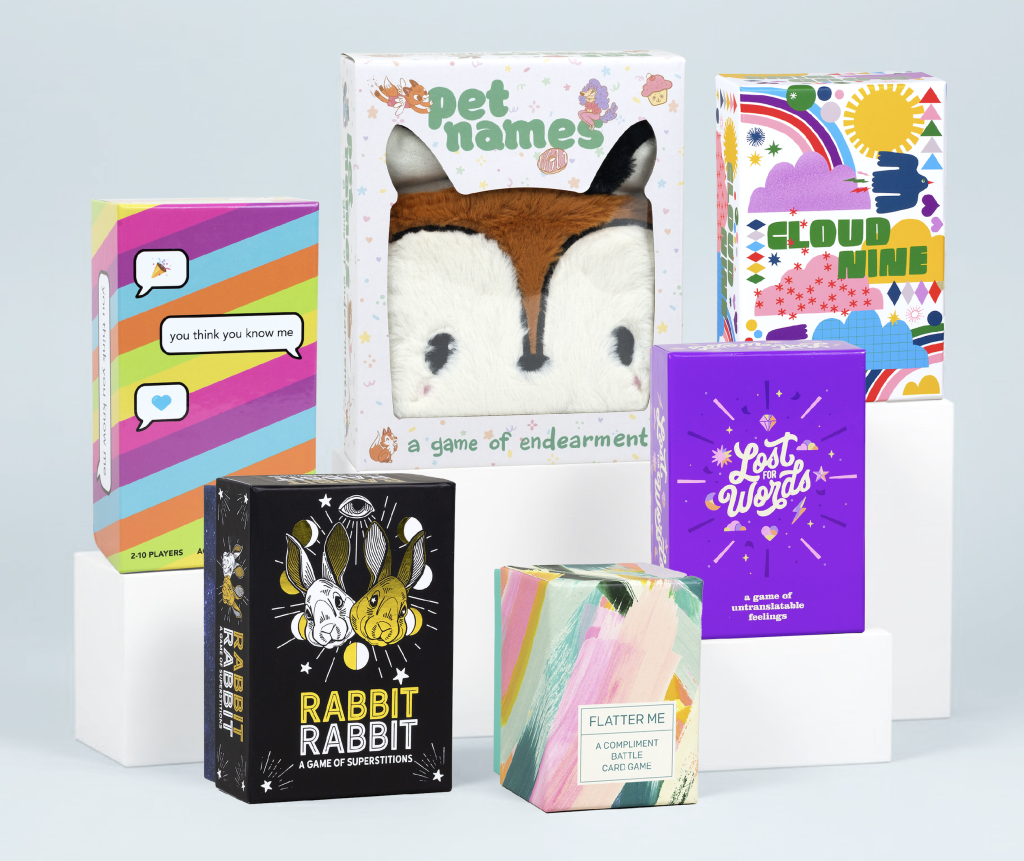
Since 2017, I’ve worked with my wife Ami as the silent partner in Pink Tiger Games, her game design studio. Together, we’ve designed and independently self-published eight card games, with two more slated for 2026.
Ami writes, designs, and playtests all the games, while I handle the graphic design, print production, websites, and copy editing. Her games have taken us all over the country, exhibiting her games at tabletop conventions, expos, and conferences from coast to coast. If we pop up in your city, come say hi!
Kickstarter
One of the most rewarding things I’ve ever worked on, my involvement with Kickstarter reshaped the direction of the rest of my career. When I first met cofounders Perry Chen, Charles Adler, and Yancey Strickler in 2008, they had an incredible idea, but were struggling to get it built.
As an advisor to the team, I helped them decide on a stack, hire the tech team, and get the site off the ground. Oh, and I suggested renaming it from “Kickstartr” to “Kickstarter.”
After launch, I brought on new project creators, recruited new employees, and generally evangelized the benefits of maintaining your creative and financial independence. My first Kickstarter project, Kind of Bloop, launched two weeks after Kickstarter itself.
Soon after, I came on board full-time as their first CTO, as the site continued to explode in popularity. I eventually moved back into an advisory role, where I’ve remained since.
Upcoming.org
In 2003, I launched Upcoming.org, a community for sharing and discovering interesting events around you, based on people you follow. Launched before Facebook or Flickr, Upcoming was among the first communities to use a social network for anything beyond meeting people.
After my son was born in 2004, I invited two friends, Gordon Luk and Leonard Lin, to come on board as co-founders. After a flurry of development, Upcoming exploded in popularity and was acquired by Yahoo in 2005. I left the company in 2007 after two years of constant growth. After I left, it fell into disrepair and Yahoo eventually shut it down in 2013.
I bought the domain back from Yahoo, and launched a Kickstarter project to restore the archives and rebuild Upcoming from scratch with a modernized stack. In April 2017, Upcoming reopened its doors, and with over 7 million historical events restored to their original URLs,
Upcoming is the first major website to be restored by its original owner using Archive Team’s preserved data.
Skittish
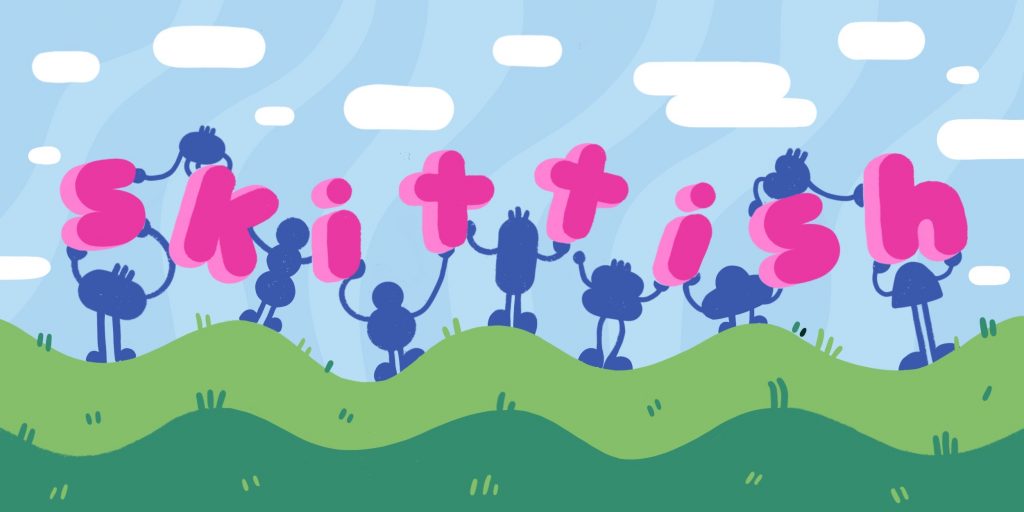
In 2021, I launched Skittish, a playful virtual space for online events where you could run around a colorful browser-based world as goofy animals and talk to other people with your actual voice. I posted updates about it on the official blog, and it received nice early coverage from The Verge, TechCrunch, and Wired. Sadly, I shuttered it at the end of 2022 as a result of declining demand for virtual events.
Belong.io
A weird little side project, Belong.io was a link aggregator that extracts links posted by over 2,000 Twitter users, normalizes them, and orders them based on a number of factors. In a naive attempt to surface projects over blog posts, it shows simpler URLs over complex ones.
For me, it was remarkably good at surfacing interesting links quickly, and I used it every single day. Fans built Twitter bots on top of it, but it remained largely unknown. It’s the project of mine I love the most that nobody knows about.
In April 2023, Twitter suspended Belong’s API token as part of the shutdown of their free public APIs under Elon Musk. RIP Twitter and RIP Belong.
Playfic
I love Inform 7, the boutique natural-language programming language for writing interactive fiction. You write stories and games in a language that resembles paragraphs of English prose, but is deceptively complex.
So I made Playfic, a community for writing and sharing interactive fiction games and sketches, and just otherwise playing around with Inform 7 without downloading the IDE or sharing compiled games. It was the first method of writing Inform 7 games entirely in the browser, and ran for 14 years before I turned it into a read-only archive.
It was used to teach game development in schools around the world, and people have used it to write interactive fanfic based on Sherlock, Doctor Who, and My Little Pony. Try out the featured games, and click “View game source” to instantly see how each game was made.
Talks
Sometimes, I talk about stuff in public. Here are two of my favorites. If you want me to talk at your thing, get in touch.
Other Stuff
I used to spend far too much time on Twitter, but Elon Musk fixed that. Now I’m active on Bluesky and Mastodon and you can follow me there.
You can also follow Waxy.org on Bluesky and Mastodon, or use ye’ olde RSS with your feedreader of choice.
You should definitely follow me on LinkedIn. I only use Facebook post-ironically.
I’m always looking for interesting story ideas and new, interesting projects to collaborate on. You can always DM on Bluesky or Mastodon, or email me at [email protected].
Thanks for reading. ✌