Skip to content
Waxy.org
Archives
About

Spotify vs. Rdio: Who Has the Exclusives?

Posted December 14, 2011 by Andy Baio

The new generation of streaming music services like Spotify, Rdio, and MOG have more music than you could consume in a lifetime. But how much of it would you really want to listen to?

There’s no shortage of great roundups and reviews showing the pros and cons of each service, but they rarely talk specifically about the different music you can find on each. They’ve all built impressive catalogs, but it’s nearly impossible to tell from casual browsing which artists and albums are exclusives for each.

Fortunately, both Rdio and Spotify offer powerful developer APIs, making it simple to compare the two. (Sadly, MOG doesn’t offer an API, so isn’t included.)

For this test, I needed a large set of popular, well-loved albums to test. I used the top 5,000 albums from Rate Your Music, the quirky 11-year-old online community dedicated to rating and reviewing music. These albums span all genres, from klezmer to chiptune, with a total of 2,282 different artists across 70 years of recorded music.

I used the Spotify and Rdio search APIs to look up each album, and checked their streaming availability in the United States. (Rdio uses the IP address to determine country of origin, making it impossible to query other countries. Spotify, on the other hand, returns a list of every region the album’s available.)

Note: The results aren’t perfect. Spotify and Rdio often have slight differences between artist and album names, which can deliver false positives. Let me know if you spot anything amiss and I’ll correct it.

Results

Of the top 5,000, about 44% were available on both Spotify and Rdio. 4.8% of the albums were only available on Spotify, while a further 6.8% were only available on Rdio. Overall, 56% of the albums were streamable on at least one of the services.

Labels are still withholding most or all of the albums from many popular artists. The Beatles, King Crimson, AC/DC, The Eagles, Tool, De La Soul, Peter Gabriel, Led Zeppelin, and Metallica are nowhere to be found, as well as most of the best albums by The Kinks. Music geeks will be sad to discover that Frank Zappa, Coil, Spacemen 3, and Joanna Newsom are all missing, as well. This landscape will constantly shift as labels change their minds; Arcade Fire was added to Spotify yesterday, and more than 200 indie labels left the streaming services last month.

But what about albums that are exclusive only to one service? The results surprised me. Spotify has a reputation for having a deeper catalog, but at least for historic critically-regarded albums, Rdio has a better selection of both popular and obscure artists. More albums in the top 5,000 were available on Rdio, and they offer exclusive access in the U.S. to huge acts like Bob Dylan, Pink Floyd, the White Stripes, and Queen.

Top Exclusive Artists

Here’s a list of the top 20 artists exclusive to each service, with the number of exclusive albums in parentheses.

Only on RdioOnly on Spotify
Bob Dylan (12)
Pink Floyd (8)
Bruce Springsteen (7)
Miles Davis (6)
The Gathering (5)
Blind Guardian (4)
Can (4)
William Basinski (4)
Iced Earth (4)
Stars of the Lid (3)
The White Stripes (3)
John Williams (3)
Queen (3)
Nevermore (3)
Thelonious Monk (3)
Charles Mingus (3)
Bill Hicks (3)
John Coltrane (2)
Camel (2)
Keith Jarrett (2)
My Dying Bride (4)
Miles Davis (4)
Candlemass (3)
Funkadelic (3)
The Pretty Things (3)
Current 93 (3)
Darkthrone (3)
Underworld (3)
Katatonia (3)
CunninLynguists (3)
Charles Mingus (2)
Mahavishnu Orchestra (2)
The Jesus Lizard (2)
The Misfits (2)
Klaus Schulze (2)
John Coltrane (2)
Galaxie 500 (2)
Silvio Rodríguez (2)
Secos & Molhados (2)
maudlin of the Well (2)

Note that artists like Miles Davis and John Coltrane appear on both lists because of how prolific they were. Both are well-represented in Spotify and Rdio, but some critically-adored out-of-print albums are unavailable on both.

Top Exclusive Albums

Digging into the albums, Rdio wins again. Nine of the top 100 albums are only found on Rdio, while only one is exclusive to Spotify. In fact, there are only 32 albums in the top 1,000 available on Spotify alone. Below is the top 30 for each service, along with their Rate Your Music ranking.

Only on RdioOnly on Spotify
Pink Floyd – The Dark Side of the Moon
Pink Floyd – Wish You Were Here
Bob Dylan – Highway 61 Revisited
Bob Dylan – Blonde on Blonde
The Clash – London Calling
Bob Dylan – Bringing It All Back Home
Bob Dylan – Blood on the Tracks
Pink Floyd – Animals
Bob Dylan – The Freewheelin’ Bob Dylan
Bob Dylan – Another Side of Bob Dylan
Bob Dylan – The Times They Are A-Changin’
Dr. Dre – The Chronic
Stars of the Lid – The Tired Sounds Of
Camel – Moonmadness
The White Stripes – Elephant
Bon Iver – For Emma, Forever Ago
John Williams – Raiders of the Lost Ark
Popol Vuh – Hosianna Mantra
Jethro Tull – Nothing Is Easy: Live at the Is…
Albert King – Born Under a Bad Sign
Keith Jarrett – Vienna Concert
Dead Kennedys – Plastic Surgery Disasters
Thin Lizzy – Black Rose: A Rock Legend
Magic Sam – West Side Soul
Bob Dylan & The Band – The Basement Tapes
Eric Dolphy – Out There
Blind Guardian – Live
Devin Townsend – Terria
Strapping Young Lad – City
Pretenders – Pretenders
The Zombies – Odessey and Oracle
Candlemass – Nightfall
Funkadelic – Standing on the Verge of Getting…
The Jesus Lizard – Goat
The Pretty Things – Parachute
The Jazz Composer’s Orchestra – The Jazz Comp…
Klaus Schulze – X
Sodom – Agent Orange
Danny Elfman – Edward Scissorhands
Galaxie 500 – Today
Current 93 – All the Pretty Little Horses
Secos & Molhados – Secos & Molhados
maudlin of the Well – Bath
Sun Kil Moon – Ghosts of the Great Highway
Anathema – Alternative 4
Darkthrone – A Blaze in the Northern Sky
The Byrds – Fifth DimensionMost Popular
The Gun Club – Miami
Autopsy – Severed Survival
My Dying Bride – Turn Loose the Swans
The Jesus Lizard – Liar
Vektor – Black Future
maudlin of the Well – Leaving Your Body Map
Jean Michel Jarre – Oxygene
16 Horsepower – Secret South
Riverside – Out of Myself
Darkthrone – Transilvanian Hunger
Nino Rota – Amarcord
Suede – Suede
Darkthrone – Under a Funeral Moon

Unless you’re a huge fan of Norwegian death metal, it’s hard to see this as anything but a win for Rdio. The fact is that both services have done a tremendous job of building the celestial jukebox — with a couple of high-profile exceptions, nearly everything you’d ever want to listen to is available at your fingertips.

Now, one huge drawback of using the Rate Your Music list is that it skews towards older album-oriented music geeks. That’s great if you like Ornette Coleman and Galaxie 500, but not so great if you like Drake and Katy Perry.

Next week, we’ll set the controls for the heart of mainstream music: the Billboard charts, analyzing every charted single in the top 100 from 1955 to the present. This will give us a completely different view of their catalogs, focused on pop singles, past and present, instead of classic albums.

Want more? Ed Summers did his own fascinating deep-dive into Spotify and Rdio uses top album lists from Alf Eaton’s Album of the Year list collection, and published the results on Google Fusion Tables. Also, try Matt Montag’s Music Smasher, a tool that searches Rdio, Spotify, and Grooveshark.

(Note: This was originally published for my Wired column.)
Leave a comment

No Copyright Intended

Posted December 9, 2011 by Andy Baio

On October 26, a YouTube user named crimewriter95 posted a full-length version of Pulp Fiction, rearranged in chronological order.

A couple things struck me about this video.

First, I’m surprised that a full-length, 2.5-hour very slight remix of a popular film can survive on YouTube for over six weeks without getting removed. Now that it’s on Kottke and Buzzfeed, I’m guessing it won’t be around for much longer.

But I was just as amused by the video description:

“The legendary movie itself placed into chronological order. If you’d like me to put the full movie itself up, let me know and I’ll be glad to oblige. Please no copyright infringement. I only put this up as a project.”

These “no copyright infringement intended” messages are everywhere on YouTube, and about as effective as a drug dealer asking if you’re a cop. It’s like a little voodoo charm that people post on their videos to ward off evil spirits.

How pervasive is it? There are about 489,000 YouTube videos that say “no copyright intended” or some variation, and about 664,000 videos have a “copyright disclaimer” citing the fair use provision in Section 107 of the Copyright Act.

Judging by his username, I’m guessing crimewriter95 is 16 years old. I wouldn’t be surprised if most of those million videos were uploaded by people under 21.

He’s hardly alone. On YouTube’s support forums, there’s rampant confusion over what copyright is. People genuinely confused that their videos were blocked even with a disclosure, confused that audio was removed even though there was no “intentional copyright infringement.” Some ask for the best wording of a disclaimer, not knowing that virtually all video is blocked without human intervention using ContentID.

YouTube’s tried to combat these misconceptions with its Copyright School, but it seems futile. For most people, sharing and remixing with attribution and no commercial intent is instinctually a-okay.

Under current copyright law, nearly every cover song on YouTube is technically illegal. Every fan-made music video, every mashup album, every supercut, every fanfic story? Quite probably illegal, though largely untested in court.

No amount of lawsuits or legal threats will change the fact that this behavior is considered normal — I’d wager the vast majority of people under 25 see nothing wrong with non-commercial sharing and remixing, or think it’s legal already.

Here’s a thought experiment: Everyone over age 12 when YouTube launched in 2005 is now able to vote.

What happens when — and this is inevitable — a generation completely comfortable with remix culture becomes a majority of the electorate, instead of the fringe youth? What happens when they start getting elected to office? (Maybe “I downloaded but didn’t share” will be the new “I smoked, but didn’t inhale.”)

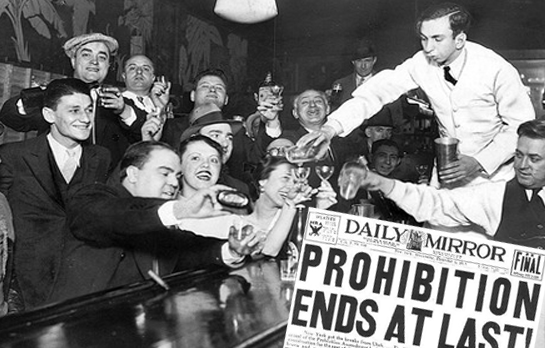
Remix culture is the new Prohibition, with massive media companies as the lone voices calling for temperance. You can criminalize commonplace activities from law-abiding people, but eventually, something has to give.

Update, February 11: Everybody’s singing the YouTube Disclaimer Blues.

146 Comments

Tracking the U.S. Government’s Response to #Occupy on Twitter

Posted November 29, 2011 by Andy Baio

It’s no exaggeration to say that Occupy Wall Street first started on Twitter. As the New York Times reported Monday, the #occupywallstreet hashtag was conceived in July, a full two months before the first tent was pitched at Zuccotti Park.

As it grew from a single camp into a movement, Twitter was essential for getting real-time updates out as events unfolded, for both supporters and local government.

Particularly in the last month, some city officials have used Twitter as a tool to keep people informed. Even as they were dismantling camps, the mayors of New York City and Portland, Oregon were posting real-time updates and responding to citizens directly.

While city officials have actively communicated their positions, the response from the federal government has been muted, at best. The Occupy movement’s concerns are much larger than city politics, with most proposed demands requiring cooperation from Washington.

So far, official statements are isolated and infrequent — an early endorsement from the president, a couple of statements from the White House press secretary, and a range of opinions from individual members of Congress.

But maybe the situation’s different online? Twitter is much more casual and conversational, and social media-savvy federal agencies often respond directly to queries and complaints from their followers. It’s possible that federal employees are addressing questions and concerns about Occupy on Twitter instead.

I decided to find out.

Data Wrangling

I originally gathered this data to build the Federal Social Media Index, a weekly report that compares federal agencies using Twitter, which I’m happy to release today as part of my work at Expert Labs.

Starting with an index of over 450 U.S. government departments and agencies, I asked the anonymous workforce at Amazon Mechanical Turk to find official Twitter accounts for each one.

Three workers researched each agency, and I approved the ones they agreed on and hand-checked the rest.

When I was done, I had a list of 126 official Twitter accounts representing a wide swath of U.S. government, from the Secret Service to the Postal Service. (Browse them all on the Federal Social Media Index or in the spreadsheet below.)

To collect all the tweets, I used ThinkUp, a free, open-source tool for archiving and analyzing social-media activity on Twitter, Facebook, and Google+ that I work on at Expert Labs.

With this dataset, I could easily tell which federal agency is the most popular (NASA), the most prolific (the NEA), and the most likely to reply to you personally (the US Census Bureau).

It also makes it very easy to see who’s talking about Occupy, and who isn’t.

Occupy Silence

Since the Occupy protests started in mid-September, nearly 15,000 messages were posted by the 126 federal Twitter accounts.

Of those accounts, only three have mentioned the Occupy protests in any way — Voice of America, the Smithsonian, and the White House.

For those unfamiliar with it, VOA is a radio and television news network broadcasting in 100 countries in 59 languages, but banned from airing in the United States because of propaganda laws. As part of their daily news coverage, they’ve tweeted about Occupy nine times since the protests began. (Here’s the most recent.)

Second, the Smithsonian responded to a tweet by Complex Magazine, refuting rumors of an OWS-themed museum exhibit.

The only other mention of the Occupy protests: one tweet from the White House nearly two months ago.

Opening Up

The obvious reason for the silence is that the federal government doesn’t yet have a position on Occupy. If they haven’t issued a formal statement, blog post, or press conference, then why Tweet?

For starters, it’s a humane and natural way to open a dialogue with a generally forgiving audience. Some of these agencies have tens or hundreds of thousands of people who care about what they have to say, or they wouldn’t be following them.

Proactively talking about potentially challenging issues like Occupy is an opportunity to bring some humanity to government, and maybe even help shape policy.

(Note: This was originally published in my column in WIRED.)

Leave a comment

Viewing the UC Davis Pepper Spraying from Multiple Angles

Posted November 21, 2011 by Andy Baio

I was stunned and appalled by the UC Davis Police spraying protestors, but struck by how many brave, curious people recorded the events. I took the four clearest videos and synchronized them. Citizen journalism FTW. Sources below.

Best viewed in HD fullscreen.

Top

briocloud, http://www.youtube.com/watch?v=K8Uj1cV97XQ

jamiehall1615, http://www.youtube.com/watch?v=wuWEx6Cfn-I

Bottom

OperationLeakS, http://www.youtube.com/watch?v=BjnR7xET7Uo

asucd, http://www.youtube.com/watch?v=6AdDLhPwpp4

74 Comments

Google Analytics A Potential Threat to Anonymous Bloggers

Posted November 16, 2011 by Andy Baio

Last month, an anonymous blogger popped up on WordPress and Twitter, aiming a giant flamethrower at Mac-friendly writers like John Gruber, Marco Arment and MG Siegler. As he unleashed wave after wave of spittle-flecked rage at “Apple puppets” and “Cupertino douchebags,” I was reminded again of John Gabriel’s theory about the effects of online anonymity.

Out of curiosity, I tried to see who the mystery blogger was.

He was using all the ordinary precautions for hiding his identity — hiding personal info in the domain record, using a different IP address from his other sites, and scrubbing any shared resources from his WordPress install.

Nonetheless, I found his other blog in under a minute — a thoughtful site about technology and local politics, detailing his full name, employer, photo, and family information. He worked for the local government, and if exposed, his anonymous blog could have cost him his job.

I didn’t identify him publicly, but let him quietly know that he wasn’t as anonymous as he thought he was. He stopped blogging that evening, and deleted the blog a week later.

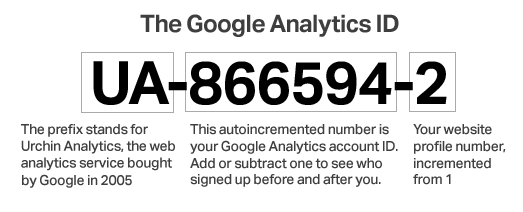
So, how did I do it? The unlucky blogger slipped up and was ratted out by an unlikely source: Google Analytics.

Reverse Lookups

Typically, Google will only reveal a user’s identity with a federal court order, as they did with a Blogger user who harassed a Vogue model in 2009.

But anonymous bloggers are at serious risk of outing themselves, simply by sharing their Google’s Analytics ID across the sites they own.

If you’re watching your pageviews, odds are you’re using Google to do it. Launched in 2005, Analytics is the most popular web statistics service online, in use by half of Alexa’s top million domains.

For the last few years, online SEO tools have published Analytics and AdSense IDs for the domains they crawl publicly, typically for competitive intelligence, such as ferreting out your competitor’s other websites.

But in the last year, several free services such as eWhois and Statsie have started offering reverse lookup of Analytics IDs. (Most also allow searching on the Google AdSense ID, though I wasn’t able to find an anonymous blogger sharing an AdSense ID across two sites.)

Finding anonymous bloggers from Analytics is less likely than other methods. It’s still more likely that someone would slip up and leave their personal info in their domain or share a server IP than to share a Google Analytics account. But it’s also more accurate. Hundreds or thousands of people can share an IP address on a single server and domain information can be faked, but a shared Google Analytics is solid evidence that both sites are run by the same person.

And unlike any other method, it can unmask people using hosted blogging services. Tumblr, Typepad and Blogger all have built-in support for Google Analytics, though reverse lookup services haven’t comprehensively indexed them. (Note that WordPress.com doesn’t support Analytics or custom Javascript, so their users aren’t affected.)

Just to be clear, this technique isn’t new. The first Google Analytics reverse lookup services started in 2009, so the technique’s been possible for at least two years. My concern is that it isn’t nearly well-known enough. It’s not mentioned in any guide to anonymous blogging I could find and several established bloggers, engineers, and entrepreneurs I spoke to were unaware of it.

Unmasking an anti-Mac blogger may not be life-changing, but if you’re an anonymous blogger writing about Chinese censorship or Mexican drug cartels, the consequences could be dire.

I decided to see how pervasive this problem is. Using a sample of 50 anonymous blogs pulled from discussion forums and Google news, only 14 were using Google Analytics, much less than the average. Half of those, about 15% of the total, were sharing an analytics ID with one or more other domains.

In about 30 minutes of searching, using only Google and eWhois, I was able to discover the identities of seven of the anonymous or pseudonymous bloggers, and in two cases, their employers. One blog about Anonymous’ hacking operations could easily be tracked to the founder’s consulting firm, while another tracking Mexican cartels was tied to a second domain with the name and address of a San Diego man.

I’ve contacted each to let them know their potential exposure.

Protecting Yourself

Some of the most important and vital voices online are anonymous, and it’s important to understand how you’re exposed. Forgetting any of these can lead to lawsuits, firings, or even death.

If you’re aware of the problem, it’s very easy to avoid getting discovered this way. Here are my recommendations for making sure you stay anonymous.

  1. Don’t use Google Analytics or any other third-party embed system. If you have to, create a new account with an anonymous email. At the very least, create a separate Analytics account to track the new domain. (From the “My Analytics Accounts” dropdown, select “Create New Account.”)
  2. Turn on domain privacy with your registrar. Better, use a hosted service to avoid domain payments entirely.
  3. If you’re hosting your own blog, don’t share IP addresses with any of your existing websites. Ideally, use a completely different host; it’s easy to discover sites on neighboring IPs.
  4. Watch your history. Sites like Whois Source track your history of domain and nameserver changes permanently, and Archive.org may archive old versions of your site. Being the first person to follow your anonymous Twitter account or promote the link could also be a giveaway.
  5. Is your anonymity a life-or-death situation? Be aware that any service you use, including your own ISP, could be forced to reveal your IP address and account details under a court order. Use shared computers and an anonymous proxy or Tor when blogging to mask your IP address. Here’s a good guide.

Stay safe.

29 Comments
⇠ Older Posts
Newer Posts ⇢
Waxy.org
Archives About