
NYT Mag cover story on the making of The Beatles: Rock Band
— great discussion of the difficulties and appeal of rhythm games via Fimoculous #Second Skin, documentary about the real lives of MMO players
— looks great, only available free until the end of tomorrow via Rock Paper Shotgun #BackUpMy.net, online backup of blogs, tweets, mail, and photos
— yes, a cloud service that backs up your cloud services via @ginatrapani #How the Soduko Grab sudoku solver for iPhone works
— simple explanation of a practical use of computer vision #Mike Sacks interviews Dan Clowes for McSweeney's
— including gossip about his foibles with the New York Times during Mister Wonderful via Adam Kempa #Joshua Schachter's A Tiny Thread, very simple Twitter conversations
— 208 lines of Python on Google App Engine #Google opens up next-gen search infrastructure for testing
— try it out; seems speedy and seems to rank real-time results higher #Facebook buys FriendFeed
— will it get sucked into the black hole, or help Facebook open up? Techcrunch says it’s a talent acquisition #Ars Technica on the worries of high-frequency algorithmic trading
— used for years, it’s accelerated since the Wall Street crisis #Tr.im shuts down, breaking millions of shortened links by year's end
— we were warned; someone should call Archive Team #Reddit user compiles George Sodini's Internet traces
— includes his Google search history, revealed by exploiting his webmail account via Delicious #Steam's Indie Games weekend sale
— curated by Braid’s Jonathan Blow and World of Goo’s Ron Carmel via braid-game.com #Translation Party
— Japanese-English translations until reaching equilibrium; more examples: don’t panic and don’t covet via MetaFilter #Sincerely, John Hughes
— touching story of his long relationship with a teenage fan turned pen pal #1944 industrial film about making the Minneapolis Star-Journal
— delightful look at how the news was made; the Star Tribune filed for bankruptcy in January #John Gruber on Apple's censorship of the NinjaWords dictionary app
— don’t miss Phil Schiller’s response which, while thoughtful, doesn’t address the App Store’s larger issues #Your World of Text
— infinite canvas for collaborative, real-time text; scroll around, explore, and add something via decontextualize.com #The Smoking Gun unmasks creators of Pranknet, destructive phone hoax group
— lulz all around via Daring Fireball #Interview with Home of the Underdogs' creator, Sarinee Achavanuntakul
— talks about the ethics of abandonware, why she gave it up, and the current revival via tigsource.com #Sticky Light, interact with lasers without a camera or projector
— someone needs to commercialize this, it looks like a wonderful toy via GameSetWatch #Eurogamer's feature on Tim Langdell's EDGE trademark trolling
— they interview both Langdell and Mobigames, quoting emails between the two via Daring Fireball #Delicious adds Twitter integration, new search tools
— if you don’t like the new freshness, the old Fresh page is still around #Bygone Bureau interviews GOOD Magazine's infographic designers
— some incredible work, though a few would give Tufte a seizure #NYT's visualization of music purchasing trends by format
— even without any visible axes, it’s still understandable; from this op-ed on the rise of streaming #
Transparency Corps, Sunlight Foundation's crowdsourcing project
— making government more transparent; check out the leaderboard #Jude Buffum's Mushroom Recession
— 8-bit commentary on the recession, and explains where those pits go via Offworld #Sam Winston's portfolio of word and letterform art
— don’t miss Romeo & Juliet, Dictionary Story, and Pencil Drawing via Delicious #GameSetWatch interviews Vector Park's Patrick Smith
— if you still haven’t bought Windosill, we have nothing to talk about #Panic cofounder Steven Frank's quitting the iPhone
— Arrington made the same move today, both fed up by idiotic recent App Store decisions #Code Rush in the Creative Commons
Last year, to commemorate the release of Firefox 3.0, I posted a heavily-annotated copy of Code Rush — the commercially-unavailable documentary from 2000 about the open-sourcing of the Netscape code base and the beginning of the Mozilla project. Shortly afterwards, I interviewed Code Rush director David Winton about the film, who asked that I take the video offline while he decided what to do with it. Last week, he made a decision.
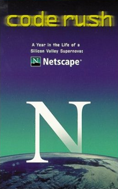
I’m happy to say that Code Rush is now released under the Creative Commons Attribution-Noncommercial-Share Alike 3.0 license. Winton and his colleague John Koten set up a dedicated homepage for the film, with links to stream or download the film in various formats.
They’re encouraging everyone to use the documentary in new ways, remixing or reusing the footage for any non-commercial use. In particular, I’d imagine the Mozilla Foundation should be very happy that they can finally use this historic footage of their origins.
Thanks to the new license, I’m able to put my annotated version of the film back up on Viddler. I’ve embedded it below. Update: Replaced with YouTube version, since Viddler is dead.
Best of all, David Winton’s announced that they’re planning on digitizing the original interview footage and making them available. “We are still working to get our hands on a digital Beta deck to digitize the original dailies, but hope to get up and running in a couple months.” If you can help them out, get in touch.
Update (August 6): I just discovered that unreleased footage from the documentary is being added to Archive.org.