
Questlove on Trayvon Martin and race in America
— also: Ta-Nehisi Coates on the irony of American justice #This American Life's best episodes
— in honor of episode #500; Ira Glass’s favorites and other staff picks #SoundSlice launches Pitch Perfect, guitar tab store for artists
— official transcriptions in the best UI ever made for guitar tab #The era of constant photography
— I keep waiting for a device that records audio or video constantly, stored remotely #DefCon asks government to stay away
— the feds were asked not to attend for the first time, in the wake of Snowden and Manning #Screens on Screen
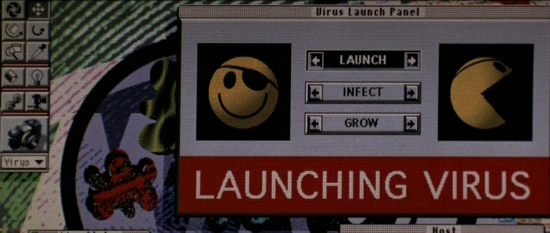
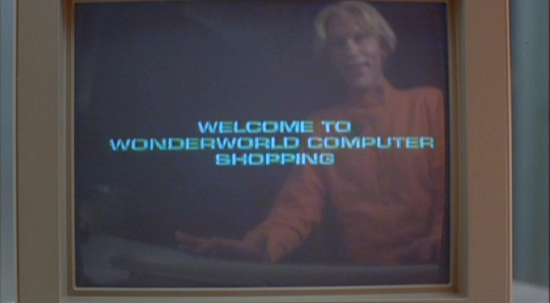
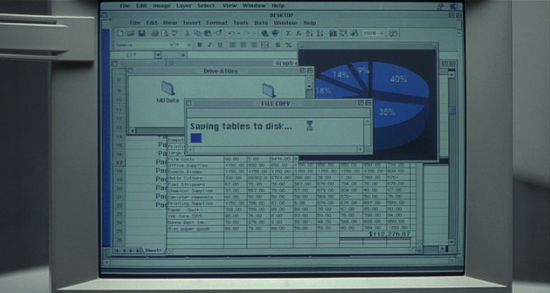
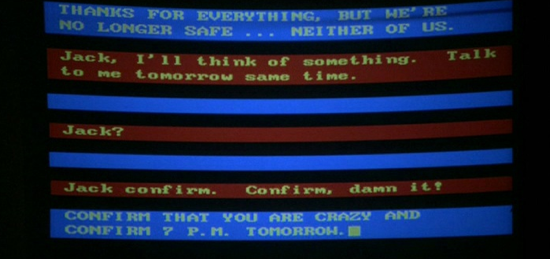
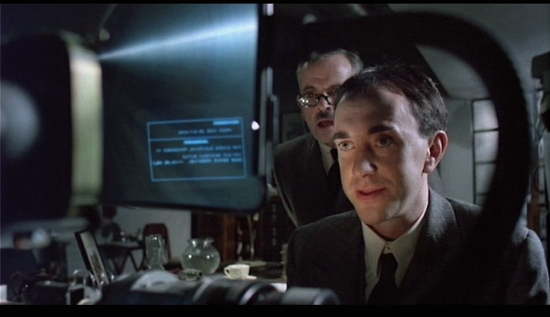
Recently, a site started making the rounds called Kit FUI — a new IMDB-like database of FUIs, fantasy or fictional UIs from TV and film. You know the ones: the virtual-reality Unix filesystem from Jurassic Park, the Terminator 2 HUD, the Esper photo analyzer from Blade Runner, and countless others.
Of course, Kit FUI wasn’t the first site to track fake UIs. In 2007, Starring the Computer began indexing computers in film, many with fictional displays. Access Main Computer File started on Tumblr in 2010, and Fake UI followed in 2012.
I’ve linked to every one of these sites in the past, because each reminded me of an incomplete project I started in 2004, but always wished I’d finished.
In August 2004, I posted a question on Ask Metafilter asking, “Is there a website compiling framegrabs of computer screens in feature films?” The consensus was no, so I decided to do it myself.
One Metafilter member, Mike Lietz, responded that he was willing to capture some screenshots from his own DVD collection. We connected by email and got to work.
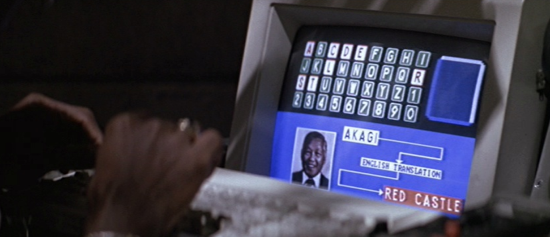
For lack of a better name, I called it “Screens on Screen” and set up the database and a simple viewer, while Mike started sending me screenshots. I built a tool for categorizing the UIs by period (past, present, or future), the platform, and what type of application they depicted. But the data entry was tedious, and Upcoming.org was starting to take off, so I put it aside. But not before Mike had captured over 1,200 screenshots from 47 films, dumped into an open directory on my server, where it stayed undiscovered for nine years.
Yesterday, on a whim, I mentioned my secret stash of screenshots on Twitter.
What's that? Oh, just my secret stash of 1,200 screenshots of computer interfaces from old movies. http://t.co/Acy1mkEQVS
— Andy Baio (@waxpancake) July 10, 2013
It immediately exploded. Even with its extremely simple directory listing, it captured people’s imaginations.
Within a couple hours, three awesome geeks immediately built new ways to browse the collection.
- Peter Hellberg made GUI, a simple, but beautiful, fullscreen photo viewer on NeoCities, that supports touch events and spacebar to advance.
- Dan Phiffer made a simple wiki to add metadata to the images.
- Jim Nielsen made a scrolling, lazy-loading interface to view them all at once.
And me? I’m absolutely giddy that people are finding new uses for a project that sat on my server ignored for nearly a decade.
Any creative person builds up a cache of unfinished projects. They usually stay hidden forever, buried and unexplored, taken to the grave.
Photographer David Friedman constantly came up with ideas he didn’t have the time to pursue, so finally decided to start doing idea dumps, posting his work in its incomplete state. To his delight, several of his ideas were picked up by his readers, who went on to make them real. I shouldn’t have been surprised the same thing would happen with Screens on Screen.
I’m going to take this as a personal lesson: stop hiding your imperfect and incomplete ideas for years. Stop collecting them in your head, like dying butterflies in a glass jar. It’s always better to let them fly.
New Yorker profile of Desert Bus
— didn’t realize my 2006 post played a role in the charity; I’ve served 9.6 terabytes so far! #NYT Magazine profile of ex-Nirvana/Soundgarden guitarist turned war hero
— fired from both bands, he went on to become part of the U.S. Army Special Forces #RIP Douglas Engelbart
— watching the Mother of All Demos again today, it’s still astounding how visionary he was #Marco Arment on the Reader shutdown, interoperability and independence
— “Well, fuck them, and fuck that.” #Real-Life Tron on an Apple IIgs
— a cycle that escaped the playfield into system memory via @helvetica #We Think Alone
— Miranda July’s weekly email project glimpses into the sent mail of notable people #Andrew Mason's Hardly Workin'
— the former Groupon founder’s album of motivational ’80s rock is actually real, and out now #An Open Letter to the Worst Wax Museum in America
— those Nacho Libre and Tropic Thunder Jack Blacks look pretty accurate, though #How XOXO Works
A week ago, we launched XOXO 2013 and the response was ridiculous. We finally closed signups yesterday, with nearly 1,500 people signing up to grab a pass. As of an hour ago, the conference is officially sold out and festival passes are going quickly.
More than anything, there were questions about how the registration process works and how passes were distributed. This led to a lot of anxiety and speculation, fueled by a lack of communication on our part, and I wanted to clear up the confusion.
Andy McMillan talked about this last week in his Medium post, but I wanted to go into a bit more detail.
The XOXO Aftermath

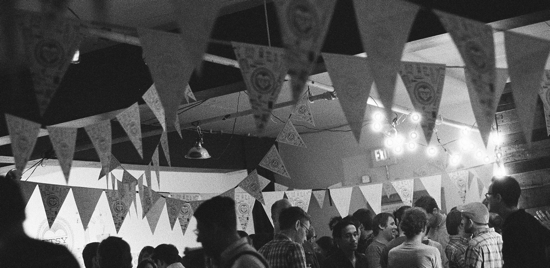
After the first festival last year, we received a crazy amount of mainstream press. The New York Times wrote four articles about it, along with features in The Verge, Wired, and Boing Boing, along with a torrent of over-the-top blog posts and tweets from the attendees. (You can see my favorites at the end of this Kickstarter update.)
All the coverage was wonderful, but it brought some unwanted attention. From the moment the event ended, I’ve been emailed nearly every day by a new class of person desperate to go to XOXO — marketers, brand managers, advertising agencies, and social media gurus.
These people are well-funded, have expense accounts, and were ready to throw money at us the moment doors opened. Several said specifically they were excited to bring the whole team!
When we started the first XOXO, it spread entirely by word-of-mouth and sold out within two days. All of those people never had a chance to hear about it until long after passes sold out, so the open registration on Kickstarter wasn’t a problem.
This year, we knew that if we opened it wide, there was a risk that this new audience would change the vibe of the event for the worse.
And, frankly, I’m not going to spend half my year planning something that I wouldn’t want to go to myself. Andy McMillan felt the same way, so something had to change.
How It Worked
When we launched the site, people looking to buy passes were surprised to find a short survey instead. We asked three questions:
- What do you do?
- What are you working on right now?
- What’s something you made that you’re proud of?
These questions were never intended to judge people on their work, but simply to determine whether they’re the type of person that makes stuff for a living or not. (Each one is hard to bluff if you’re not a maker type.)
Before and after the survey process, we added this disclaimer:
XOXO is a small event, and we can only accommodate a fraction of the demand. To ensure a diverse and amazing group of attendees, we’re giving priority access to the people that embody what XOXO’s about — artists, makers, hackers, coders and founders.
But we didn’t go into details, largely because we were still working them out ourselves. This led to a lot of speculation, and a feeling of exclusivity that we never wanted. People assumed that they were applying, instead of just joining a queue, and that we were ranking them based on their accomplishments. Neither was true.
In the end, it was very simple.
First, about 20% of the total passes went to people we plucked out of the queue, regardless of when they signed up. These were a mix of new and established faces that we knew other attendees would want to meet, usually people behind abnormally interesting projects and websites.
The rest, about 80% of the passes, were given out in the order that people signed up. For those passes, we asked a simple question: is this someone who makes something or not? If they were primarily an artist, coder, writer, hacker, designer or maker, then they were in. We never judged the quality or merit of their work.
Growing XOXO

While some people assumed we were trying to keep people out, the truth is that we want to include more people than ever. This year, we offered Festival Only passes to allow far more people to come to Portland and be part of the event, even after the conference is sold out.
We don’t want XOXO to be an invite-only event like Foo Camp or TED because we know that many of the most creative people in the world are still undiscovered, and we don’t know who they are. If they’re drawn to XOXO, we don’t want to leave them out.
We don’t want XOXO to be a summer camp for the same group of people every year, which is why we didn’t give preferential treatment to past attendees. Diversity is incredibly important to us.
And we don’t want it to be a free-for-all like SXSW, because the shift in focus lowers the signal-to-noise ratio to unacceptable levels. There’s nothing wrong with advertising, marketing, or PR — it’s just not something that we care about, and it’s outside of XOXO’s focus on independent art and tech.
Andy and I spent six months debating the best way to maintain the incredibly high caliber of audience we had last year, and this system is the best we came up with. The biggest failing was communication, which we can solve, but I think people will be floored when we post the attendee directory. It’s a ridiculously creative group of people.
If we do decide to do XOXO again, we’ll see what worked and what sucked, and make changes accordingly. Maybe we’ll scrap it entirely and try something else. Like we’ve said, XOXO is an experimental event, and we’re treating it that way.