
CGP Grey’s interactive Rock, Paper, Scissors game on YouTube
— deeper than it appears with over 100 unlisted videos and multiple secret endings #Amiga ASCII Art
— a 2015 thesis on the history of ASCII art focused on its use in the Amiga warez and BBS scenes, translated and updated for 2023 via Good Internet #Boston Dynamics turned its robot dog into a talking tour guide with ChatGPT
— their autonomous murderbots are much more fun with a top hat, googly eyes, and British accent via Good Internet #Now add a walrus: Prompt engineering in DALL-E 3
— fascinating post by Simon Willison with details about how ChatGPT was instructed to use DALL-E 3 #This woman on TikTok is building a tunnel system under her house
— her side quest is building a castle from the stone she’s quarried, I just wonder what her neighbors think #Separating fact from fiction on social media in times of conflict
— Bellingcat’s tips for spotting misinformation and disinformation using real, recent examples #The restaurant nearest Google
— Mia Sato investigates whether the SEO-driven trend of naming your business “X Near Me” actually works #Neal.fun’s Internet Artifacts, an online museum of artifacts from the early internet
— including the first spam email, first MP3, first livestream, and dozens of notable early websites with a working browser and Flash emulation #SANANDREAS.TXT
— a GTA V mod that lets players leave floating persistent messages anywhere in the game world for others to find #Interviewing Dracula Daily’s Matt Kirkland at Powell’s Books
If you’re in the Portland, Oregon area, I’ll be at Powell’s Books at Cedar Hills this Thursday interviewing Matt Kirkland, the creator of the enormously popular Dracula Daily, which originally serialized Bram Stoker’s 1897 novel as a Substack newsletter, creating an internet-scale book club with over 240,000 subscribers, now published as a gorgeous hardcover volume annotated with memes, fan art, and comics from the community.
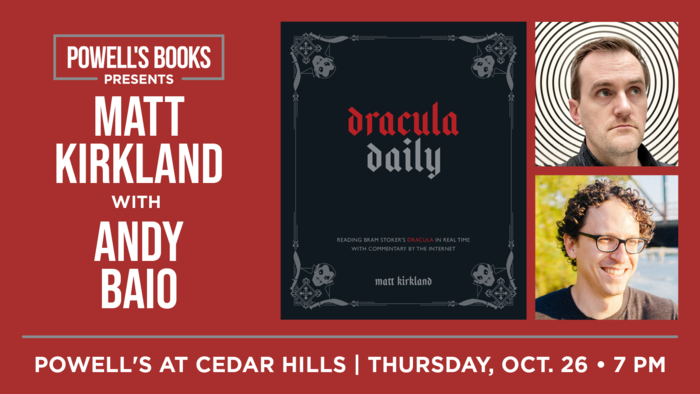
Bram Stoker’s Dracula is an epistolary novel, told in the form of a series of diary entries and letters, and Dracula Daily delivers each one to subscribers “as-it-happens,” on the day that each message is dated, pacing it out over a period of six months from May to November.
Simon Willison’s primer on embeddings
— a great overview for the technically-minded about a powerful tool for search, recommendations, and classification #subpar pool
— obsessed with this chonky pool game from the creator of Holedown, out now for iOS/Android, Switch, and Windows #Comic Anhs
— a charming personal website with each section introduced by four-panel comics via heydingus.net #An art critic reviewed TikTok’s most-followed visual artist, spawning a parasocial pile-on
— the original review is worth reading, a thoughtful and nuanced take that makes the subway artist’s reaction even more bizarre #Tom Cardy and Brian David Gilbert’s Beautiful Mind
— two of my favorite internet weirdos joined forces to make musical madness #Trust & Safety Tycoon
— the followup to the equally-challenging Moderator Mayhem from Techdirt’s Mike Masnick #Katie Notopoulos on how decentralized federated networks can rebuild the social internet
— “my toxic trait is I can’t shake that naïve optimism of the early internet”; same here, Katie #What the deal with juggling in animation?
— Jasper’s spreadsheet collects over 200 examples from 1919 to today, ranked by accuracy and difficulty via @plentyofalcoves #Meta in Myanmar
— Erin Kissane completed her four-part series about the role of Meta and Facebook in the Rohingya genocide #Whole Earth Index
— a near-complete archive of the Whole Earth Catalog and related publications from 1970 to 2002 via @longnow #Satoshi Kon: The Lost Interview
— Mark Slutsky interviewed the visionary director in 2007 about Paprika, published here in full for the first time #Is Laufey jazz?
— Adam Neely’s fascinating breakdown of her musical influences, appeal to young audiences, and the modern state of jazz #Ghost Town Pumpkin Festival
— open until Halloween, explore a spooky multiplayer world where a thousand ghosts have shared their pumpkin designs #The Great Zelle Pool Scam
— yet another Zelle horror story, this time with scammers hacking contractors’ email accounts to solicit payments from their customers #Control Panel for Twitter
— browser add-on that reverses many of the most annoying changes under Musk, including yesterday’s removal of link titles #31 Days of Halloween
— for the ninth year, Laura E. Hall’s popup daily newsletter of spooky stuff is posting every day of October #Rolling Stone’s oral history of School of Rock
— charming inside story of making the movie from the cast and crew #The Curse of Dialup World
— inside story of a wildly mismanaged dialup ISP in the late ’90s , the billing process alone made me scream via Hacker News #Songs That Stop on the Word “Stop”
— Todd in the Shadows made a perfect supercut, over 30 minutes long! via @peterme #Weird A.I. Yankovic, a cursed deep dive into the world of voice cloning
In the parallel universe of last year’s Weird: The Al Yankovic Story, Dr. Demento encourages a young Al Yankovic (Daniel Radcliffe) to move away from song parodies and start writing original songs of his own. During an LSD trip, Al writes “Eat It,” a 100% original song that’s definitely not based on any other song, which quickly becomes “the biggest hit by anybody, ever.”
Later, Weird Al’s enraged to learn from his manager that former Jackson 5 frontman Michael Jackson turned the tables on him, changing the words of “Eat It” to make his own parody, “Beat It.”
This got me thinking: what if every Weird Al song was the original, and every other artist was covering his songs instead? With recent advances in A.I. voice cloning, I realized that I could bring this monstrous alternate reality to life.
This was a terrible idea and I regret everything.