
Major label stars endorse Megaupload in video
— they buried the lede here; Megaupload built a tool for their users to bypass DNS blacklists #First chapter of Clay Johnson's The Information Diet
— highly recommended book about consuming information healthier; go buy it #The Daily Show on predatory "free" iOS games for kids
— worth it just to see Gameview’s CEO squirm #Xeni Jardin on her breast cancer diagnosis
— reading her tweets in real-time was devastating and took tremendous bravery #Indie Game: The Movie on meeting Kevin Smith and following dreams
— they were accepted into Sundance, one of 14 films funded on Kickstarter to do so; Kevin responds #No Copyright Intended
On October 26, a YouTube user named crimewriter95 posted a full-length version of Pulp Fiction, rearranged in chronological order.
A couple things struck me about this video.
First, I’m surprised that a full-length, 2.5-hour very slight remix of a popular film can survive on YouTube for over six weeks without getting removed. Now that it’s on Kottke and Buzzfeed, I’m guessing it won’t be around for much longer.
But I was just as amused by the video description:
“The legendary movie itself placed into chronological order. If you’d like me to put the full movie itself up, let me know and I’ll be glad to oblige. Please no copyright infringement. I only put this up as a project.”
These “no copyright infringement intended” messages are everywhere on YouTube, and about as effective as a drug dealer asking if you’re a cop. It’s like a little voodoo charm that people post on their videos to ward off evil spirits.
How pervasive is it? There are about 489,000 YouTube videos that say “no copyright intended” or some variation, and about 664,000 videos have a “copyright disclaimer” citing the fair use provision in Section 107 of the Copyright Act.
Judging by his username, I’m guessing crimewriter95 is 16 years old. I wouldn’t be surprised if most of those million videos were uploaded by people under 21.
He’s hardly alone. On YouTube’s support forums, there’s rampant confusion over what copyright is. People genuinely confused that their videos were blocked even with a disclosure, confused that audio was removed even though there was no “intentional copyright infringement.” Some ask for the best wording of a disclaimer, not knowing that virtually all video is blocked without human intervention using ContentID.
YouTube’s tried to combat these misconceptions with its Copyright School, but it seems futile. For most people, sharing and remixing with attribution and no commercial intent is instinctually a-okay.
Under current copyright law, nearly every cover song on YouTube is technically illegal. Every fan-made music video, every mashup album, every supercut, every fanfic story? Quite probably illegal, though largely untested in court.
No amount of lawsuits or legal threats will change the fact that this behavior is considered normal — I’d wager the vast majority of people under 25 see nothing wrong with non-commercial sharing and remixing, or think it’s legal already.
Here’s a thought experiment: Everyone over age 12 when YouTube launched in 2005 is now able to vote.
What happens when — and this is inevitable — a generation completely comfortable with remix culture becomes a majority of the electorate, instead of the fringe youth? What happens when they start getting elected to office? (Maybe “I downloaded but didn’t share” will be the new “I smoked, but didn’t inhale.”)
Remix culture is the new Prohibition, with massive media companies as the lone voices calling for temperance. You can criminalize commonplace activities from law-abiding people, but eventually, something has to give.
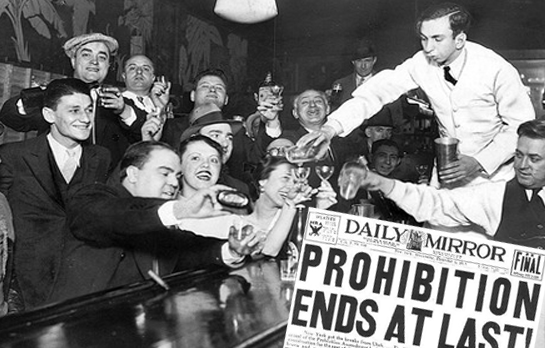
Update, February 11: Everybody’s singing the YouTube Disclaimer Blues.
ICE releases popular hip-hop blog's domain after year of deception
— excellent case study of how SOPA would be abused #Family Guy writer's first-person account of his Occupy LA arrest
— sickening treatment at the hands of the LAPD; there’s absolutely no excuse for this #Twitter launches major redesign
— available now in new iPhone and Android apps, rolling out to web soon #Maciej Ceglowski on the dangers of free web services
— if you love a service, demand that they find a business model or clone them yourself #Interregnum, an animated short on French proto-hacker René Carmille
— he sabotaged the Nazi’s IBM punchcard census, saving countless lives in the process #Swiss government keeps downloading legal after piracy study
— they concluded it leads to more sales for music, movies, games, and concert tickets via Boing Boing #Introducing the Federal Social Media Index
— my new project at Expert Labs, a dashboard tracking 125 federal agencies on Twitter #US judge orders hundreds of domains "de-indexed" from Google, Facebook, Twitter
— who needs SOPA? truly horrible ruling #Gregg Gethard recounts the story of his painfully awkward Carmen Sandiego appearance
— how awkward? watch his intro via r/videos #Tracking the U.S. Government’s Response to #Occupy on Twitter
It’s no exaggeration to say that Occupy Wall Street first started on Twitter. As the New York Times reported Monday, the #occupywallstreet hashtag was conceived in July, a full two months before the first tent was pitched at Zuccotti Park.
As it grew from a single camp into a movement, Twitter was essential for getting real-time updates out as events unfolded, for both supporters and local government.
Particularly in the last month, some city officials have used Twitter as a tool to keep people informed. Even as they were dismantling camps, the mayors of New York City and Portland, Oregon were posting real-time updates and responding to citizens directly.
While city officials have actively communicated their positions, the response from the federal government has been muted, at best. The Occupy movement’s concerns are much larger than city politics, with most proposed demands requiring cooperation from Washington.
So far, official statements are isolated and infrequent — an early endorsement from the president, a couple of statements from the White House press secretary, and a range of opinions from individual members of Congress.
But maybe the situation’s different online? Twitter is much more casual and conversational, and social media-savvy federal agencies often respond directly to queries and complaints from their followers. It’s possible that federal employees are addressing questions and concerns about Occupy on Twitter instead.
I decided to find out.
Data Wrangling
I originally gathered this data to build the Federal Social Media Index, a weekly report that compares federal agencies using Twitter, which I’m happy to release today as part of my work at Expert Labs.
Starting with an index of over 450 U.S. government departments and agencies, I asked the anonymous workforce at Amazon Mechanical Turk to find official Twitter accounts for each one.
Three workers researched each agency, and I approved the ones they agreed on and hand-checked the rest.
When I was done, I had a list of 126 official Twitter accounts representing a wide swath of U.S. government, from the Secret Service to the Postal Service. (Browse them all on the Federal Social Media Index or in the spreadsheet below.)
To collect all the tweets, I used ThinkUp, a free, open-source tool for archiving and analyzing social-media activity on Twitter, Facebook, and Google+ that I work on at Expert Labs.
With this dataset, I could easily tell which federal agency is the most popular (NASA), the most prolific (the NEA), and the most likely to reply to you personally (the US Census Bureau).
It also makes it very easy to see who’s talking about Occupy, and who isn’t.
Occupy Silence
Since the Occupy protests started in mid-September, nearly 15,000 messages were posted by the 126 federal Twitter accounts.
Of those accounts, only three have mentioned the Occupy protests in any way — Voice of America, the Smithsonian, and the White House.
For those unfamiliar with it, VOA is a radio and television news network broadcasting in 100 countries in 59 languages, but banned from airing in the United States because of propaganda laws. As part of their daily news coverage, they’ve tweeted about Occupy nine times since the protests began. (Here’s the most recent.)
Second, the Smithsonian responded to a tweet by Complex Magazine, refuting rumors of an OWS-themed museum exhibit.
The only other mention of the Occupy protests: one tweet from the White House nearly two months ago.

Opening Up
The obvious reason for the silence is that the federal government doesn’t yet have a position on Occupy. If they haven’t issued a formal statement, blog post, or press conference, then why Tweet?
For starters, it’s a humane and natural way to open a dialogue with a generally forgiving audience. Some of these agencies have tens or hundreds of thousands of people who care about what they have to say, or they wouldn’t be following them.
Proactively talking about potentially challenging issues like Occupy is an opportunity to bring some humanity to government, and maybe even help shape policy.
(Note: This was originally published in my column in WIRED.)