Your annual reminder of the hidden costs of taking venture capital is here — it’s the First Round Capital Holiday Video, a yearly cringe-fest of startups parodying the year’s biggest pop hits, with lyrics tweaked to reflect the worst of startup culture. (Full lyrics at the end of the post.)
I have a grim fascination with these videos and their ever-increasing production budgets. Every year, I watch them with my hands shielding my eyes, and collect them in a YouTube playlist. (For some reason, 2009’s video is only on Vimeo.)
Of course, if you ask First Round about it, and probably most of the founders in the video, they’ll say, it’s all in fun! We’re just blowing off some steam at the end of the year! I know one of the partners at First Round. I know some of the people at the startups in the videos. I don’t think their intentions are bad.
But once these startups have taken funding, do they really have a choice?
This year, Crunchbase says First Round invested in 57 startups, a median amount of $8.5M and an average of $18.5 million.
If someone gives you $8.5 million, sits on your board, and owns a significant part of your company, you’re going to dance if they say “dance.” You’re going to sing if they say “sing.”
And you’ll ask your entire team to do it too, and they’ll be captured on video, streamable on YouTube for years after they quit or were laid off.
In a situation like that, you can’t really say no. You just put on the costume, smile, and dance.
This morning, my friend Charles pointed me to a song on Tumblr that blew up, a remix of Mariah Carey’s “All I Want for Christmas Is You.”
The original poster deleted it, so I’m mirroring it here.
It’s a terrible and amazing thing to listen to — a conversion of the original MP3 to MIDI, and back again to MP3. The resulting version sounds like Mariah as a player piano — none of the original recording is preserved, only a series of hyperactive notes matching the frequencies of the original song.
Incredibly, you can still make out the lyrics and music, though likely only if you’re familiar with the original song.
It reminds me of this German project from 2009, in which Austrian composer Peter Ablinger used a computer-controlled piano to play a child’s voice.
So I had to try out a couple other songs to see how it sounds. I’m pretty happy with the results. Enjoy.
I used a web-based converter for the MP3 to MIDI conversion, and I used timidity and ffmpeg for the conversion back to MP3.
And, of course, just as I was finishing these videos, my friend Tim pointed out that Tim Troppoli tried this same technique earlier this year. And, go figure, he used Smash Mouth’s “All Star” too. It’s like the Lenna photo for audio.
More great examples in his video, including Piano Man and Stayin’ Alive. I’m not familiar with the Pokemon theme, and it was totally nonsensical to me. I can’t make out a single lyric, a great example of how your brain’s filling in the gaps.
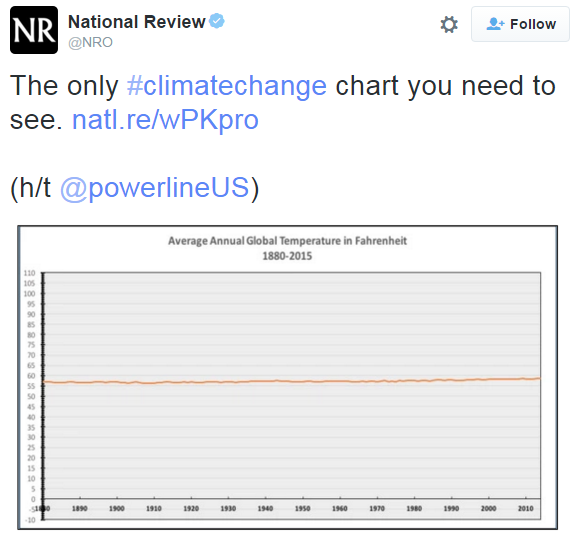
In June, data journalist David Yanofsky wrote a Quartz article about chart design, “It’s OK not to start your y-axis at zero.”
Last month, Vox followed with a more spirited defense of the practice, “Shut up about the y-axis. It shouldn’t always start at zero.”
Both publications noticed a common trend: any time they published a chart that truncated the y-axis, they’d get a bunch of angry emails and tweets claiming it’s deceptive. But Vox and Quartz are absolutely right — context matters, and often, starting a chart at a zero axis can mislead too.
Vox’s article led to some angry responses, like this one from writer Ramez Naam:
Seldom have I seen @voxdotcom get something so wrong. https://t.co/ErktflVKKH Truncating the Y-axis really is dishonest in most cases.
Donald Trump joined Twitter in March 2009, and announced his presidential campaign on June 16. Since then, if you’ve spent any time on Twitter, you’ve probably seen some variation of this joke:
Donald Trump is basically a YouTube comment section running for president
This incarnation by Brian Gaar was posted last week, and got over 36,000 retweets.
But he’s hardly the first. Literally thousands of people have posted this sentiment, and I’ve personally seen several in my timeline with thousands of retweets.
Which got me thinking, who was the first and how did it evolve?
Let’s go back in reverse-chronological order, hitting some of the most popular versions.
On December 8, the day after Brian Gaar’s tweet last week, New York Magazine art critic Jerry Saltz got over 1,400 RTs with the same idea, this time adding an image.
Basically, Trump is what would happen if the comments section became human & ran for President. (h/t @Choire ) pic.twitter.com/LqJMhP1wdi
Many people saw it from this tweet on November 22 by @mamasnark, which got over 10,200 retweets. (I see several people citing this tweet as the original when it reappears now.)
Basically, Trump is what would happen if the comments section became a human and ran for president.
On November 10, Jon Stewart appeared at the Stand Up for Heroes benefit at Madison Square Garden and said, “It’s like an Internet comment troll ran for president.” This quote got extensive coverage from publications like the Hollywood Reporter, MSNBC, and Huffington Post.
Four days earlier, on November 6, Keith Olbermann appeared on Real Time with Bill Maher and said that Trump “sounds like an Internet comments section running for President.”
On August 7, Marc Andreesen tweeted it as an overheard comment, getting over 2,500 retweets.
OH: "Trump is like an Internet comments section decided to run for President."
On July 14, a Daily Kos blogger wrote, “Donald Trump is what would happen if a reddit comment thread ran for office.” This quote was picked up on Twitter.
On July 8, The Daily Beast’s Olivia Nuzzi got more than 2,700 retweets for her take on it.
Trump is like a YouTube comment thread that achieved sentience
Only a single day after Trump announced his presidency, on June 17, a Twitter user in Johannesburg drew a parallel to the News24 comments section and tweeted the idea — though as a reply and with no retweets, it was likely only seen by her 332 followers that also follow Trump.
@realDonaldTrump announcing his Presidential candidacy is like the News24 comments section running for President. Lord help us all.
How far back does this joke go? The earliest incarnation of the “Internet comment personified” idea on Twitter is this tweet by a guy named Mark on April 27, 2011.
Donald Trump is the living embodiment of an Internet message board troll.
No, of course not. I’ve written about the phenomenon of multiple discovery before, and nowhere is it more obvious and easily provable than in the comedy world, and especially easy to document on Twitter.
As Donald Trump came online, and as his prominence in the public eye grew, many more people started thinking about his behavior.
Of course, there are plagiarists in the world who brazenly copy jokes on Twitter, Instagram, and elsewhere, sometimes resulting in huge audiences.
But most people simply drew the connection between garbage Internet comment sections and the way Trump acts, and tweeted their epiphany.
So, settle in. It’s going to be a long year.
At this rate, 30% of all Twitter activity in 2016 will be "Donald Trump is a comments section running for President" jokes.
Want many more examples? Oscar Bartos made @trump_comment, a bot dedicated to retweeting examples of this meme, and self-referential takes like this one.
Did I miss any major examples? Post a comment or tweet at me.
Psychonauts is one of my favorite games of all time, the story of a psychic summer camp for kids, a government conspiracy, and love story rolled into one. The writing is funny and sweet, the characters and world wildly memorable, with some of the most inventive and innovative level design I’ve ever seen.
I first linked to the Psychonauts demo a week before its release in April 2005, and it still holds up incredibly well. If you’ve never played it, it’s deeply discounted on Steam in a $20 bundle with Broken Age, Grim Fandango Remastered, Brutal Legend, Costume Quest, and a bunch of other great Double Fine games for the ridiculous price for the next 16 hours. Or just pick it up for $10 normally.
It’s a miracle the game was ever released at all. As Double Fine’s first game, its development was notoriously fraught with major obstacles — a neverending crunch mode over 4.5 years of development, cancelled funding, and multiple near-death experiences. In the end, the game was released to critical acclaim and relatively weak sales, but built a deep and obsessive cult following over the last decade, eventually selling 1.7 million copies.
To commemorate the launch of their new campaign to fund its sequel, Double Fine and 2 Player Productions made a 50-minute short about the history of Psychonauts. It’s an incredible archive of Tim Schafer’s unseen video footage, design thinking, and interviews with the team talking about their experience making the game, good and bad.
Double Fine, more than any indie studio I know, is defined by its willingness to keep pushing itself to try new things. Some of these experiments work and some fall flat, with other indies able to watch and learn from the sidelines.
Their Kickstarter project for Broken Age paved the way for many other indie game developers and fans to use crowdfunding, and they documented it all in public with the Double Fine Adventure documentary, one of the best accounts of making anything ever, entirely free on YouTube. Their Amnesia Fortnight project, first internal and later public, encouraged experimentation within a team. Their Steam Early Access projects are perhaps the most controversial, with the cancellation of one game, though even that’s found a life of its own.
And, now, with the Psychonauts 2 campaign on Fig, they’re testing the waters for equity crowdfunding: the ability for members of the public to get a financial return on a crowdfunding project, rather than rewards alone.
(As a Kickstarter advisor and shareholder, I’m biased, but I have concerns about equity crowdfunding for indies. If you think backers feel entitled now, wait until they’re expecting a financial return.)
But I admire Double Fine for pushing everything forward, and I’m excited to see the results of their experiment. I supported the Double Fine Adventure, and of the 229 projects I’ve backed on Kickstarter, it’s still my personal favorite. I have my signed poster, backer shirt, and I played and loved Broken Age. But it was worth it for the documentary alone, seeing every exciting and painful moment of making the game with the people behind it.
So, of course, I backed the Psychonauts 2 project and I can’t wait to see what happens. If you want to come along for the ride, you can still back the project until January 12.
As a side note, I played a teeny, tiny role in this story.
Five years ago, when Kickstarter was only a year old and two years before Notch made headlines with a tweet, I read this Joystiq article by Justin McElroy, writing that Tim Schafer was open to making Psychonauts 2 if he could find a willing publisher.
I freaked out, asked my friend Brandon Boyer for an email intro, and sent this email to Tim Schafer on November 12, 2010.
Tim: Huge, huge fan of your work. I recently replayed Psychonauts, DOTT, and MI 1 and 2 with my six-year-old son. Just as good as I remembered.
Anyway, I showed the Joystiq article to the Kickstarter team and we’re all freaking out about the prospects of what Psychonauts 2 on Kickstarter might look like. Jamin from Kill Screen’s at the Kickstarter office right now and they’re all talking about it.
Going directly to fans to pre-sell the game before it exists sounds insane, but it’s very possible. It’s an incredible promotional tool, a great way to show there’s a market for the game to publishers, and doesn’t involve any kind of investment or preclude any kind of future publisher arrangements. And, of course, Kickstarter would promote the hell out of it to the community.
I’d love to introduce you to the team and answer any questions you might have, if you’d even *remotely* consider this.
I never heard back, but three years later, I invited Tim Schafer to speak at XOXO. There, for the first time, I heard the story of what happened after he received my email, the conversation that it kicked off internally at Double Fine with his business manager, and how it eventually led to the record-breaking Double Fine Adventure project. (The story starts at 17:30.)
Back in October, NPR’s Hidden Brain podcast covered the story of professional poker player Annie Duke, the only woman to compete in the World Series of Poker: Tournament of Champions in 2004.
It’s a fascinating story about her own impostor syndrome, feeling like she didn’t belong at that table, but also how she used gender stereotypes to work in her favor and eventually win the competition.
I love everything about this story. Once you’ve listened to it, I recommend watching the final moments of the game on YouTube.
For another perspective, Wil Wheaton pointed me to Annie Duke’s talk on The Moth, a gripping retelling in her own words of that tournament. It was the first time she’d ever played on television, and the first time anyone could see her hand.
While listening to the NPR story, I went looking for a refresher on the rules of Texas hold ’em, and ended up on this Wikipedia page for betting in Poker.
Immediately, I was struck by the language, which was dominated by male pronouns:
When it is a player’s turn to act, the first verbal declaration or action he takes binds him to his choice of action; this rule prevents a player from changing his action after seeing how other players react to his initial, verbal action.
If he declines to raise, he is said to “check his option.”
If a player borrows money to raise, he forfeits the right to go all-in later in that same hand — if he is re-raised, he ”must” borrow money to call, or fold.
And so on, for over 12,000 words. It felt like it was borrowed from another time, cribbed from a thrift shop poker book from the 1970s.
Because it was Wikipedia, I felt like I could do something about it. So I spent some time making the biggest edit I’ve ever made on Wikipedia: changing every male pronoun to gender-neutral language, sometimes rephrasing as “the player,” but often using the singular they. I tried to be careful about readability, making sure to only use it in cases where it couldn’t be confused with a plural group.
So “a player may fold by surrendering his cards” became “a player may fold by surrendering their cards.”
In the end, it took longer than I’d like to admit — over 160 changes in one big commit.
I saved it, tweeted about it, and promptly forgot about it.
While listening to @AnnieDuke on NPR yesterday, I looked up some poker rules on Wikipedia. All male pronouns. So… https://t.co/VifkHy4dPQ
Yesterday, I remembered the change and popped over to Wikipedia to see if it survived.
Unsurprisingly, every change was reverted less than a week later. The user left a reason: “‘they’ is a plural term and inappropriate for an encyclopedia article.”
As it turns out, Wikipedia has its own guidelines about gender-neutral language. The Manual of Style recommends, “Use gender-neutral language where this can be done with clarity and precision. For example, avoid the generic he.”
A Wikipedia essay expands on the guideline, “There is no Wikipedia consensus either for or against the singular they… Although it is widely used in informal writing and speech, its acceptability in formal writing is disputed.”
Fortunately, that’s changing.
The singular “they” is one of the most hotly-debated subjects in exciting world of grammar. Last month, Dennis Baron declared it the “word of the year.”
Just last week, the Washington Post style manual became the latest to accept the pronoun. Bill Walsh, The Post’s copy editor, explains their decision:
There was one change, though, that I knew would cause controversy. For many years, I’ve been rooting for — but stopping short of employing — what is known as the singular they as the only sensible solution to English’s lack of a gender-neutral third-person singular personal pronoun. (Everyone has their own opinion about this.) He once filled that role, but a male default hasn’t been palatable for decades. Using she in a sort of linguistic affirmative action strikes me as patronizing. Alternating he and she is silly, as are he/she, (s)he and attempts at made-up pronouns. The only thing standing in the way of they has been the appearance of incorrectness — the lack of acceptance among educated readers.
What finally pushed me from acceptance to action on gender-neutral pronouns was the increasing visibility of gender-neutral people. The Post has run at least one profile of a person who identifies as neither male nor female and specifically requests they and the like instead of he or she. Trans and genderqueer awareness will raise difficult questions down the road, with some people requesting newly invented or even individually made-up pronouns. The New York Times, which unlike The Post routinely uses the honorifics Mr., Mrs., Miss and Ms., recently used the gender-neutral Mx. at one subject’s request. But simply allowing they for a gender-nonconforming person is a no-brainer. And once we’ve done that, why not allow it for the most awkward of those he or she situations that have troubled us for so many years?
Grammar manuals and copy editors may be slow to adapt to how the rest of the world uses language, but the increasing popularity of “they” reflects an increasingly gender-inclusive culture.
In the meantime, Wikipedia leaves the singular “they” in limbo, neither endorsed nor banned. Most of the arguments seem to boil down to some variation of “it looks ugly.”
But what’s uglier: a mismatch of number or a mismatch of gender? One is mildly irritating, maybe slightly confusing. The other is often insulting and alienating.
Language evolves, and there’s little prescriptivists can do to change it.
Eventually, they’ll have to suck it up, accept the cards on the table, and fold.
Though they’ll inevitably make a lot of noise in the process.
Two weeks ago, the server I host all my personal projects on was hacked by some guy in Ukraine. It really sucked.
I was overdue for a redesign anyway.
I first noticed something was amiss while trying to post a link here and the server was unusually slow. I SSHed in and the server was slow to respond, as if system resources were being consumed by a runaway process.
A quick ‘top’ revealed that MySQL was pegging the CPU, so I logged into the MySQL console and saw that a dump of the database was being written out to a file. This was very unusual: I never schedule database backups in the middle of the day, and it was using a different MySQL user to make the dumps.
Then I noticed where the mysqldump was being written to: the directory for a theme from a WordPress installation I’d set up the previous month, an experiment to finally migrate this blog off of MovableType.
This set off all my alarms. I immediately shut down Apache and MySQL, cutting off the culprit before they could download the dumped data or do any serious damage.
I’d recently updated to the latest WordPress beta, and saw that the functions.php file in the twentysixteen theme directory was replaced with hastily-obfuscated PHP allowing arbitrary commands to be run on my server through the browser.
This confirmed all my lingering unease about running WordPress, built up over a decade of hearing horror stories of friends and acquaintances getting hacked–but that stereotype of WordPress security was outdated and wrong, and led me to make a very stupid, very serious blunder.
I moved the WordPress install, along with the hacked PHP and aborted mysqldump, to my local machine and deleted it from my server. I looked through the logs to see what else they’d been up to, and convinced I’d closed the hole by removing WordPress, eventually started my server back up to minimize downtime.
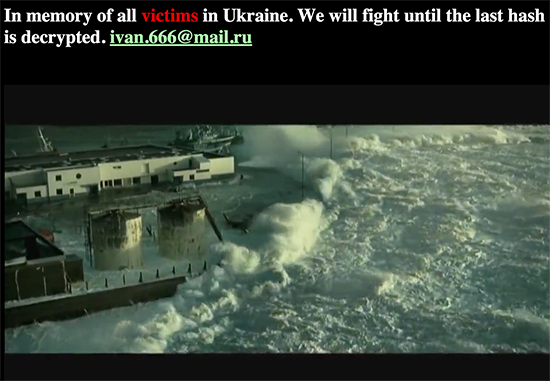
The next day, “Ivan” dropped every database in MySQL, deleted my blog, and replaced it with this pseudo-political polemic he’s used on other compromised sites.
After going through every log file, and with the help of Gary Pendergast from the WordPress security team, I assembled a minute-by-minute timeline of what happened.
Our friendly hacker first appeared in the logs on the Waxy.org homepage, running a vulnerability scan testing thousands of different URLs to find possible vectors of attack. And it finds one, a copy of PHPMyAdmin that I apparently installed in 2002 and forgot about it entirely.
He tried to sign in briefly, but failed, so starts looking for other PHP scripts on the server using a simple Google query for “site:waxy.org inurl:php”. This turns up half a dozen results, with one that looks promising — a project I did in 2005 to visualize a data dump that Boing Boing released to commemorate their fifth birthday.
He starts an open-source toolkit called SQLMap to probe the script for SQL injection holes, it quickly finds one, and uses it to own the database.
In the database, he sees a database for WordPress from the installation I mentioned earlier. He fires up a third vulnerability scanner called WPScan to search for WordPress vulnerabilities, but it’s not clear if he finds any.
Either way, it’s not necessary — with access to MySQL, the culprit can add himself a WordPress admin and sign in. Immediately, he uses the WordPress theme editor to install malware PHP to the theme, allowing him to execute arbitrary commands on the server. Just in case, he writes copies of the malware PHP to three more locations outside of the WordPress installation in case it’s deleted.
So, after I removed access to WordPress, he was still able to get to the malware needed to own the box. Eventually, he grows bored and deletes the database and everything on Waxy.org.
Comedy of Errors
Fortunately, I had a database backup from earlier that morning, and a recent backup of all files. I killed all services on the server, and started the long process of restoring sites carefully, one by one, with modern security practices in mind.
But this was easily one of the most miserable, stressful experiences of my life. Yesterday, I woke up in the middle of the night with a cold-sweat nightmare that I was hacked again.
I had a PTSD-ish nightmare that my server was hacked again, this time from an exploit in Postfix. Stupid lingering stress.
And it was so avoidable, born from laziness and complacency. Let’s go through the highlights of bad security practices:
My old server at Softlayer was running continuously for eight straight years, since December 2007, and there was code carried over from previous servers dating back to 2002.
The Boing Boing Stats was a throwaway PHP hack that sat untouched for a decade on multiple servers with a glaring SQL injection hole. And, hell, I didn’t even know that ancient copy of PHPMyAdmin installation was still hanging around.
I was using a shared MySQL user account for nearly every project running on the server, which had near-universal permission to delete records or drop databases entirely. Plus, it allowed for remote connections. So bad.
I played loose with file permissions, giving the Apache user the ability to write to far more than it should have.
I was running Centos 5, but not keeping up-to-date with security updates.
Critically, I wasn’t running any software to monitor and ban vulnerability scans or alert me to malicious activity.
And that’s just scratching the surface of issues relevant to this hack. I was still using password-based logins with SSH, root logins were available, MySQL passwords were weak… Frankly, it’s amazing I wasn’t hacked earlier.
Righting Wrongs
If there’s a bright side to any of this, it’s that it gave me a long-overdue crash course in modern infosec practices. And migrating from a dedicated leased server to virtual servers feels like waking up in the future.
After a bunch of research, I decided to abandon dedicated servers entirely and move to a beefy DigitalOcean droplet running Ubuntu 14.04. It’s more powerful than my old server, provisioned instantly, and I’m paying a fraction of the price. DigitalOcean’s admin tools are phenomenal, and backups are automatic and painless.
DigitalOcean’s tutorials are absolutely incredible, and I found them invaluable in initial setup, securing Ubuntu, my firewall, MySQL, and using Fail2Ban to protect Apache and SSH. There’s still more work to do for monitoring intrusions, but it’s a start.
So, all of that sucked. But, while bittersweet, I’m better and stronger for it.
I’m so excited about this, I had to try it myself—Jason Scott announced that the Internet Archive now supports embedding playable games and other software from their collections in web pages. (Look for the share icon on any software page.)
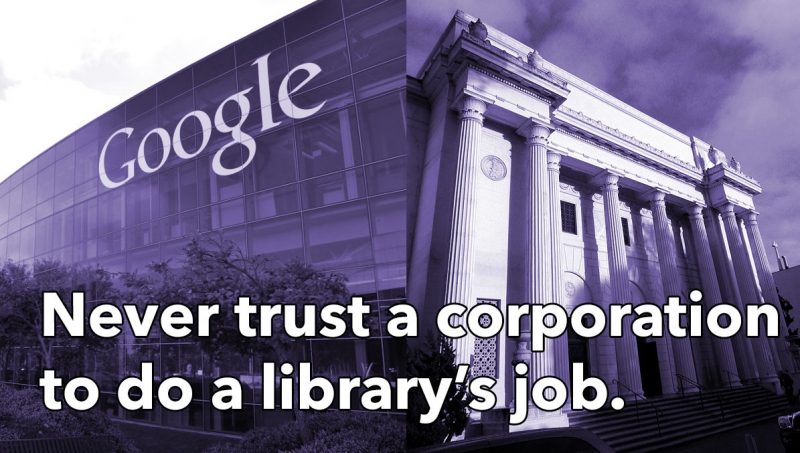
As Google abandons its past, Internet archivists step in to save our collective memory
Google wrote its mission statement in 1999, a year after launch, setting the course for the company’s next decade:
“Google’s mission is to organize the world’s information and make it universally accessible and useful.”
For years, Google’s mission included the preservation of the past.
In 2001, Google made their first acquisition, the Deja archives. The largest collection of Usenet archives, Google relaunched it as Google Groups, supplemented with archived messages going back to 1981.
In 2004, Google Books signaled the company’s intention to scan every known book, partnering with libraries and developing its own book scanner capable of digitizing 1,000 pages per hour.
In 2006, Google News Archive launched, with historical news articles dating back 200 years. In 2008, they expanded it to include their own digitization efforts, scanning newspapers that were never online.
In the last five years, starting around 2010, the shifting priorities of Google’s management left these archival projects in limbo, or abandoned entirely.
After a series of redesigns, Google Groups is effectively dead for research purposes. The archives, while still online, have no means of searching by date.
Google News Archives are dead, killed off in 2011, now directing searchers to just use Google.
Even Google Search, their flagship product, stopped focusing on the history of the web. In 2011, Google removed the Timeline view letting users filter search results by date, while a series of major changes to their search ranking algorithm increasingly favored freshness over older pages from established sources. (To the detriment of some.)
Two months ago, Larry Page said the company’s outgrown its 14-year-old mission statement. Its ambitions have grown, and its priorities have shifted.
Google in 2015 is focused on the present and future. Its social and mobile efforts, experiments with robotics and artificial intelligence, self-driving vehicles and fiberoptics.
As it turns out, organizing the world’s information isn’t always profitable. Projects that preserve the past for the public good aren’t really a big profit center. Old Google knew that, but didn’t seem to care.
The desire to preserve the past died along with 20% time, Google Labs, and the spirit of haphazard experimentation.
Google may have dropped the ball on the past, but fortunately, someone was there to pick it up.
The Internet Archive is mostly known for archiving the web, a task the San Francisco-based nonprofit has tirelessly done since 1996, two years before Google was founded.
The Wayback Machine now indexes over 435 billion webpages going back nearly 20 years, the largest archive of the web.
For most people, it ends there. But that’s barely scratching the surface.
Most don’t know that the Internet Archive also hosts:
Books. One of the world’s largest open collections of digitized books, over 6 million public domain books, and an open library catalog.
After he joined the Internet Archive as an employee, he started shoveling all that vintage software onto their servers, along with software gathered from historic FTP sites, shareware websites, tape archives, and anything else he could find.
But actually using old software can be rough even for experienced geeks, often requiring a maze of outdated archival utilities, obscure file formats, and emulators to run.
In October 2011, Jason Scott wrote a call-to-arms aimed at making computer history accessible and ubiquitous — by porting classic systems to the browser.
“Without sounding too superlative, I think this will change computer history forever. The ability to bring software up and running into any browser window will enable instant, clear recall and reference of the computing experience to millions.”
The project started attempting a Javascript port of MESS, the incredible open-source project to emulate over 900 different computers, consoles, and hardware platforms, everything from the Atari 2600 and Commodore 64 to your old Speak & Spell and Texas Instruments graphic calculator.
Two years later, it was all real.
In October 2013, the Internet Archive tested the waters with the Historical Software Collection, 64 historic games and applications from computing history playable in the browser. No installation required — just one click, and you were trying out Spacewar! for the PDP-1, VisiCalc for the Apple II, or Pitfall for the Atari 2600.
Millions of people are discovering software they’ve never seen before, or revisiting games from their past. People are making Let’s Play videos of 30-year-old games, played in a Chrome tab.
When this launched, there were dozens of confused comments from people wondering what old videogames has to do with Internet history.
In my mind, this stems from mistaken perception issues of the Internet Archive as solely an institution saving webpages.
But their mission and motto is much broader:
Universal access to all knowledge.
The Internet Archive is not Google.
The Internet Archive is a chaotic, beautiful mess. It’s not well-organized, and its tools for browsing and searching the wealth of material on there are still rudimentary, but getting better.
But this software emulation project feels, to me, like the kind of thing Google would have tried in 2003. Big, bold, technically challenging, and for the greater good.
This effort is the perfect articulation of what makes the Internet Archive great — with repercussions for the future we won’t fully appreciate for years.
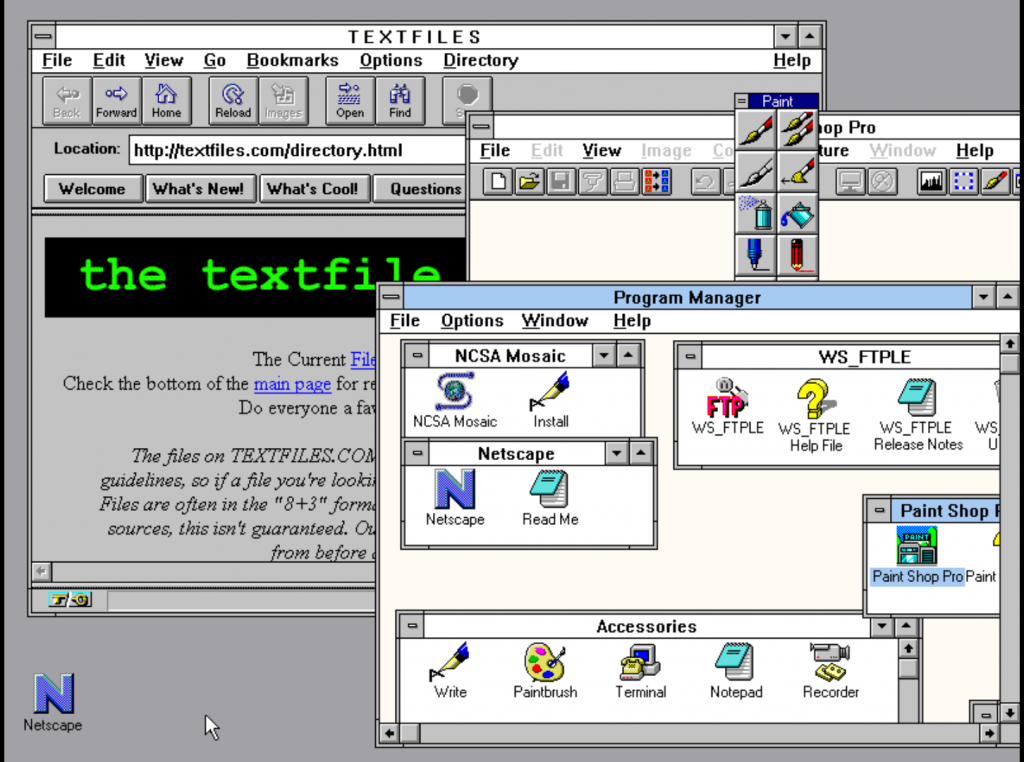
But here’s a glimpse: last week, one of the JSMESS developers managed to get Netscape running on Windows 3.1 with functional networking. All of computing history is within our grasp, accessible from a single click, and this is the first step.
I played Solitaire while I waited for Trumpet Winsock to connect to the Internet. In a Chrome tab.
It’s not just about games — that’s just the hook.
It’s about preserving our digital history, which as we know now, is as easy to delete as 15 years of GeoCities.
We can’t expect for-profit corporations to care about the past, but we can support the independent, nonprofit organizations that do.
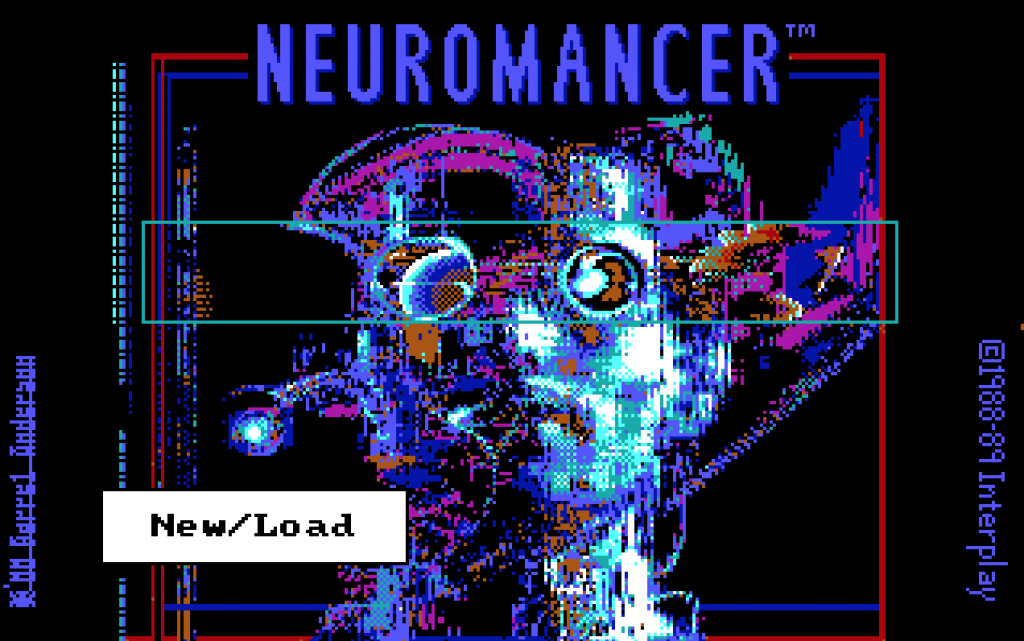
Title screen from Abandoned Places: A Time for Heroes, an RPG from 1993 I’ve never heard of, but started playing within ten seconds of seeing the title for the first time.
In January 2004, the Los Angeles Times published an article headlined “Screener Ends Up on the Internet,” a story about the recent leak of the Something’s Gotta Give screener copy intended for Oscar voters.
This headline struck me as laughably clueless — like reading “Local Man Views Pornography On Internet” — but the MPAA statements inside were even more surreal, claiming it “marked the first time a so-called screener sent to an Oscar voter had been made available for illegal copying.”
Anyone who’d spent ten minutes on Usenet in the early 2000s knew this was nonsense. Oscar screeners leaked regularly and reliably, often with watermarks intact, typically around December and early January when they were mailed to Academy voters.
So I did a little digging and found that all but one of that year’s 22 nominated films were already online.
A decade later, it’s become an annual ritual for me.
On the morning the Oscar nominees are announced, I roll out of bed, load up some tabs, and start doing research into every nominated film.
The result is this Google Spreadsheet encompassing all 413 Oscar-nominated feature films for the last 13 years.
A glimpse at the data for this year’s nominees. Here’s the full version.
Along with the official U.S. and Oscar screener release dates, I include the leak dates for each major way that films typically find their way online:
Cam. The old standby, a handheld camera in a theater. The worst quality, and increasingly uncommon.
Telesync. Typically, a cam with better audio, often from headphone jacks in theater seats intended as hearing aids.
Telecine, R5, PPV, Webrip, and HDRips. The terminology and sourcing’s changed through the years, but these are all high-quality rips with solid audio and video. (Generally speaking, Telecines were ripped from original prints distributed to theaters, R5 from “Region 5” DVDs sent to other regions to combat piracy, PPV from advanced pay-per-view sources, Webrip from early online releases like iTunes, and HDRip from a variety of sources, but typically from HDTV.)
Screener. Great quality, usually intended for media or competition review, but can leak at any point in the distribution chain, often with watermarks intact. (As Ellen DeGeneres knows well.)
Retail. A rip from the official retail release.
And then I use a little spreadsheet magic to calculate tables with a bunch of stats tracking how many films leaked online and how quickly.
Yes, this is my idea of a good time. I’m great at parties.
DVD In An HD World
In April 2004, the MPAA was already crowing about a decline in screener piracy, citing their watermarking technology and FBI assistance to increase accountability.
This was the start of a decade-long battle against screener piracy, but a funny thing happened in the last couple years:
Screeners weren’t declining then, but they’re declining now. But not because of increased accountability, watermarks, or new DRM technology.
Screeners aren’t leaking because they don’t matter anymore.
Think of it this way:
If you’re in a scene release group—one of the underground bands of misfits with names like SiMPLE, EVO, or TiTAN you see tagged in every torrent — you’re competing with dozens of others trying to release films online as quickly as possible, at the highest possible quality.
If you’re the first to release a highly-prized film in a high-quality release, you win bragging rights over every other group.
A release that’s lower quality than one already leaked by someone else? Completely worthless. A cam isn’t great, but a telesync is better. A telecine is marginally better than a telesync, but a watermarked screener? Much, much better.
But here’s the thing: screeners are stuck in the last decade. While we’re all streaming HD movies from iTunes or Netflix, the movie studios almost universally send screeners by mail on DVDs, which is forever stuck in low-resolution standard-definition quality. A small handful are sent in higher-definition Blu-ray.
This year, one Academy member received 68 screeners — 59 on DVD and only nine on Blu-ray. Only 13% of screeners were sent to voters in HD quality.
As a result, virtually any HD source is more prestigious than a DVD screener. And with the shift to online distribution, there’s an increasing supply of possible HD sources to draw from before screeners are ever sent to voters.
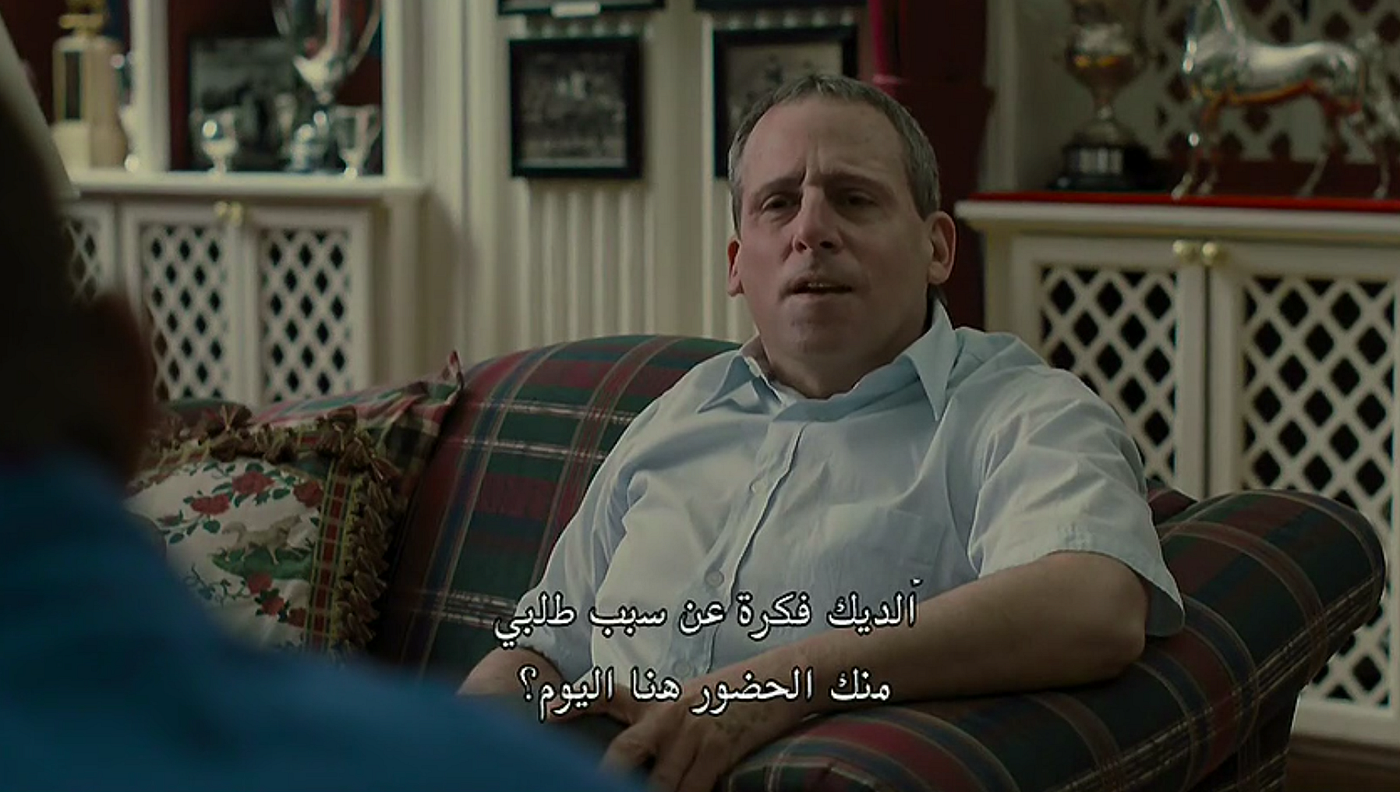
On December 27, Foxcatcher leaked online in HD quality by the release group EVO with hardcoded Arabic subtitles, a pretty strong indication it wasn’t sourced from a screener.
EVO released a new version without subtitles on January 6, captured from a 1080p source and released as a WEB-DL.
Even if someone did manage to get a copy of the Foxcatcher DVD screener right now, it’s unlikely it would ever be released. It’s garbage compared to either of these two releases — standard-definition and likely littered with watermarks or other dumb security precautions.
Now, in 2015, Oscar-nominated films leak online as quickly and consistently as ever.
Of this year’s 36 nominated films, 34 already leaked online in some form — everything except Song of the Sea and Glen Campbell: I’ll Be Me.
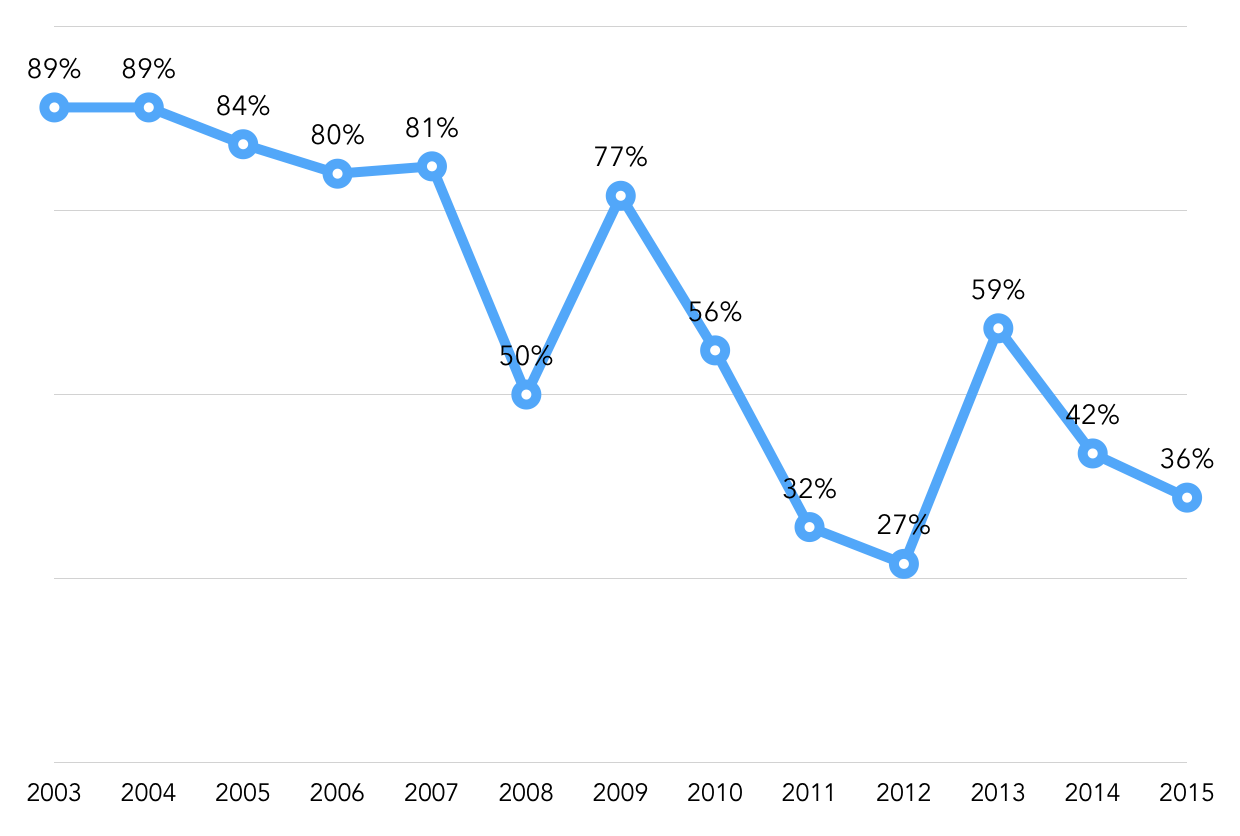
But only 36% of those were leaked from screeners, down from a high of 89% in 2003 and 2004.
With the caveat that there’s a month left before the Oscar ceremony, the chart below shows the percentage of screeners that have leaked online by Oscar night since 2003.
What the MPAA Thinks Is Leaking
Percentage of screeners copies that leaked before Oscar night
Seems to be trending downward, right? The Academy must finally be winning the war against piracy! Huzzah!
Not so fast.
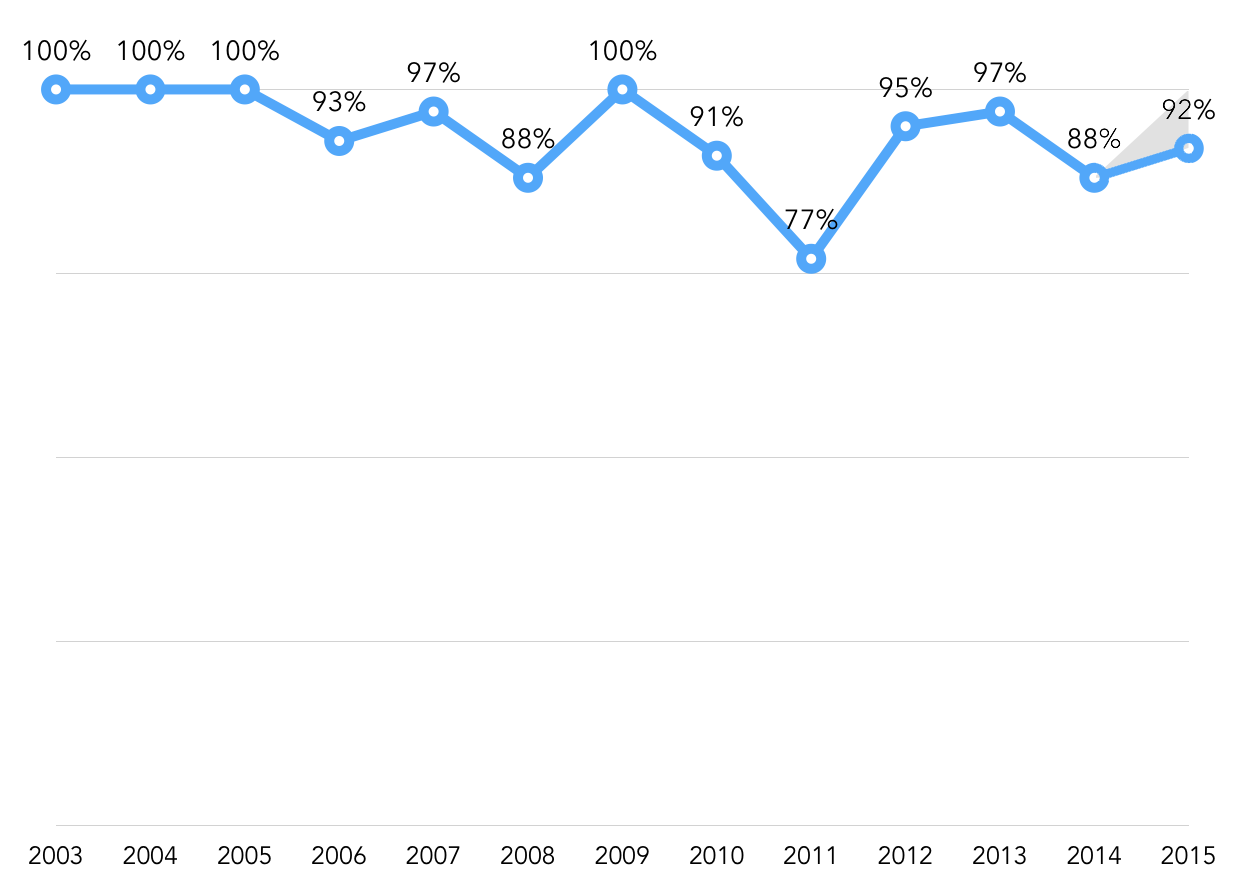
Here’s the percentage of films that have leaked in any high-quality format — whether ripped from the web, pay-per-view, retail or screeners — before Oscar night.
What’s Actually Leaking
Percentage of films available in high-quality format online before Oscar night. Note: The 2015 percentage will almost certainly go up before Oscar night.
Already, with a month to go before the ceremony, 92% of this year’s nominated films have already leaked in DVD or higher quality, more than last year. (Inevitably, this number will rise in the days leading up to the ceremony.)
The big change: A staggering 44% of this year’s crop of nominees leaked as a high-quality rip from some source outside of traditional screeners or retail releases — the highest percentage since I started tracking films in 2003.
The insatiable appetite for HD video led pirate groups to find new pipelines for sharing films before they even reach voters’ mailboxes, and in much better quality. These new sources for HD leaks, lurking anywhere from mastering studios to the mailroom, may be much harder for the MPAA to find than leaks from their own members.
Pirates are now watching films at higher quality than the industry insiders voting on them.
The industry’s reliance on DVDs for review copies, combined with their insistence on watermarks and other irritating security measures, made them undesirable in an HD world.
But the studios may not have a choice. Academy voters are an older crowd — the average age is 63 — who may not own Blu-ray players or be comfortable watching screeners online. If studios want their films viewed, they’re stuck stuffing DVDs in envelopes.
Eventually, the industry will need to adapt to digital distribution as DVDs die along with the oldest generation of voters.
Until then, Academy voters hoping to review HD films at home will have to do like the pirates do — grab some popcorn, turn down the lights, and fire up BitTorrent.
Notes on Methodology
For my spreadsheet, I include the full-length feature films in every Oscar category except documentary and foreign films — even music, makeup, and costume design.
I use IMDB for the release dates, always using the first available U.S. date, even if it was a limited release.
All the leak dates are taken from VCD Quality, supplemented by dates in ORLYDB. I always use the first leak date, excluding unviewable or incomplete nuked releases.
The official screener release dates are from Academy member Ken Rudolph, who kindly lists the dates he receives each screener on his personal homepage.
I don’t normally make New Year’s Resolutions, online or off, but I made an exception this year. Here’s mine:
“Block with abandon. I spent far too many emotional cycles last year on people arguing with me in bad faith, diving into arguments that could never be won. At some point, I stopped arguing and started blocking. I blocked hundreds of randos who insulted me or threatened people I admire— sea lions sauntering their way into my attention — and turned the Internet into something I could love again. Never. Again.”
As of today, I’ve blocked 603 accounts, the vast majority of those in the last three months.
Last month, I threw a Lazyweb request out into the ether:
I need a Chrome add-on to make Twitter blocking a one-click process. Something like this would be just great. pic.twitter.com/f1lQ1MJloR
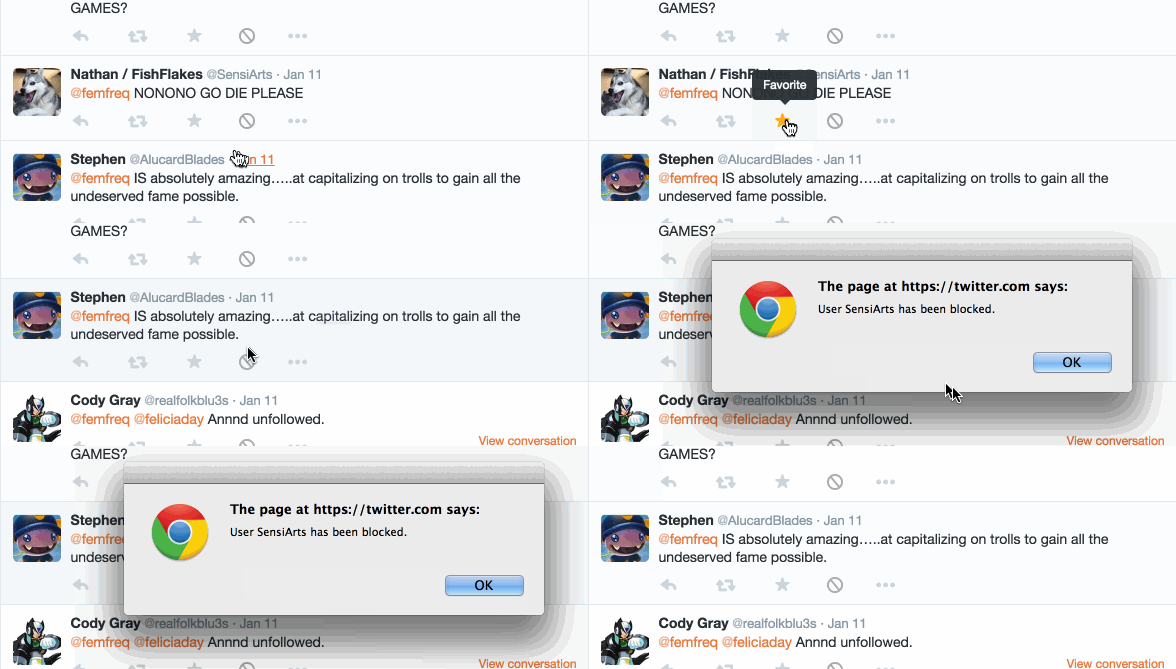
A few days later, he delivered Twitter Quicker Blocker, a Chrome add-on that does one thing beautifully: it turns blocking into a one-click process from the Twitter website. (Two weeks later, Brian Henriquez made his own as a learning exercise.)
Here’s what that looks like:
For me, this was enough to make Twitter usable again. For those facing heavier abuse and harassment, tools like Block Together, GG Auto Blocker, and The Block Bot are out there.
Ideally, Twitter would provide better tools for managing your experience and coping with Internet assholes, but until then, I’m grateful to all the devs trying to make things better.