If you’ve ever looked at the replies on any newsworthy amateur video posted to Twitter, you’ll see an inevitable chorus of news organizations and broadcast journalists in the replies, usually asking two questions:
Did you shoot this video?
Can we use it on all our platforms, affiliates, etc with credit?
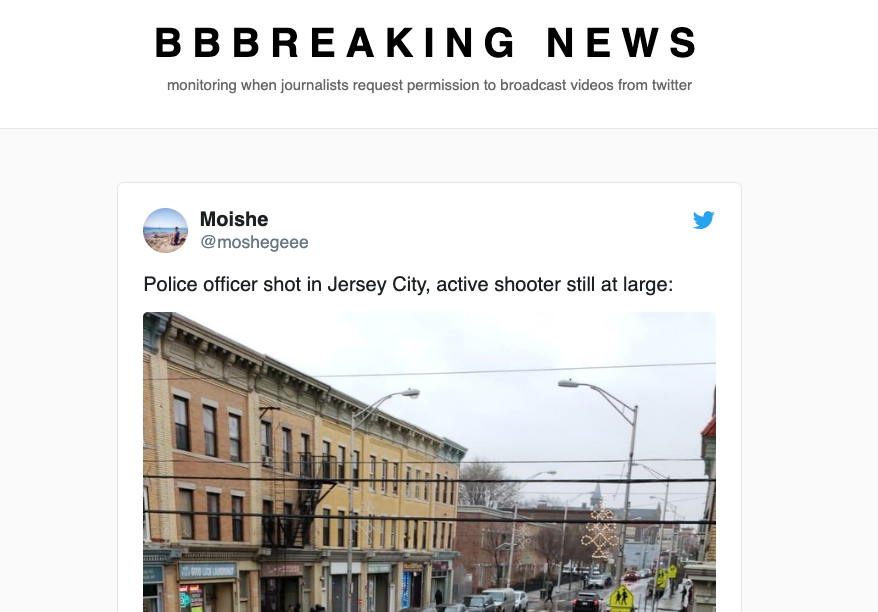
That gave me an idea, which I posted to Twitter.
I bet you could make a great breaking news site that just monitors this Twitter search of media properties asking for permission to broadcast user videos, and scoops them by automatically posting the most active videos. https://t.co/xP3160ezHQ
I’ve returned regularly since Corey launched it and, as expected, it’s a powerful way of tracking a particular type of breaking news: visual stories with footage captured by normal people at the right place and right time.
Much of it is of interest only to local news channels: traffic accidents, subway mishaps, a wild animal on the loose, the occasional building fire.
But frequently, Bbbreaking News shows the impact of gun violence and climate change: a near-constant stream of active shooter scenarios, interspersed with massive brush fires, catastrophic flooding, and extreme weather events.
It’s a fascinating way to see the stories that broadcast media is currently tracking and viewing their sources before they can even report on it, captured by the people stuck in the middle.
I recommend checking it out. Thanks to Corey for running with the idea and saving me the effort of building it myself!
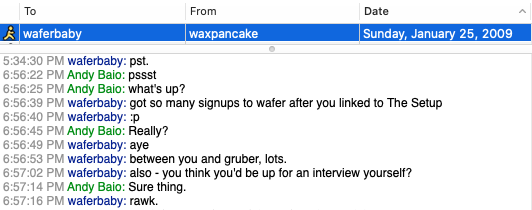
On January 22, 2009, I linked to Daniel Bogan’s newly-launched Uses This (then called “The Setup”), an interview series where he asks interesting people about “the tools and techniques they use to get things done.”
Three days later, Daniel asked me on AOL Instant Messenger if I’d be open to doing an interview myself.
I happily agreed—and then waited nearly 11 years to get around to it, despite his occasional prodding.
Yesterday, an artist on Twitter named Nana ran an experiment to test a theory.
hey can y'all do me a favor and quote tweet/reply to this with something along the lines of 'I want this on a shirt', thank you pic.twitter.com/UhuGRQgU6b
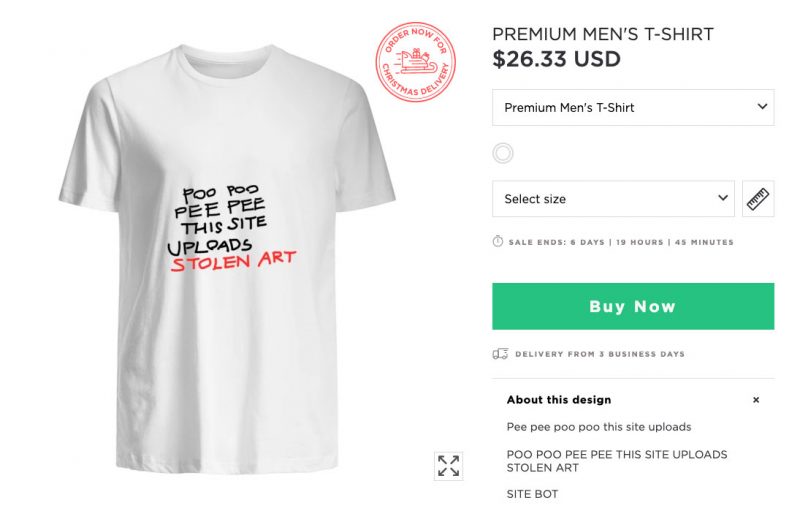
Their suspicion was that bots were actively looking on Twitter for phrases like “I want this on a shirt” or “This needs to be a t-shirt,” automatically scraping the quoted images, and instantly selling them without permission as print-on-demand t-shirts.
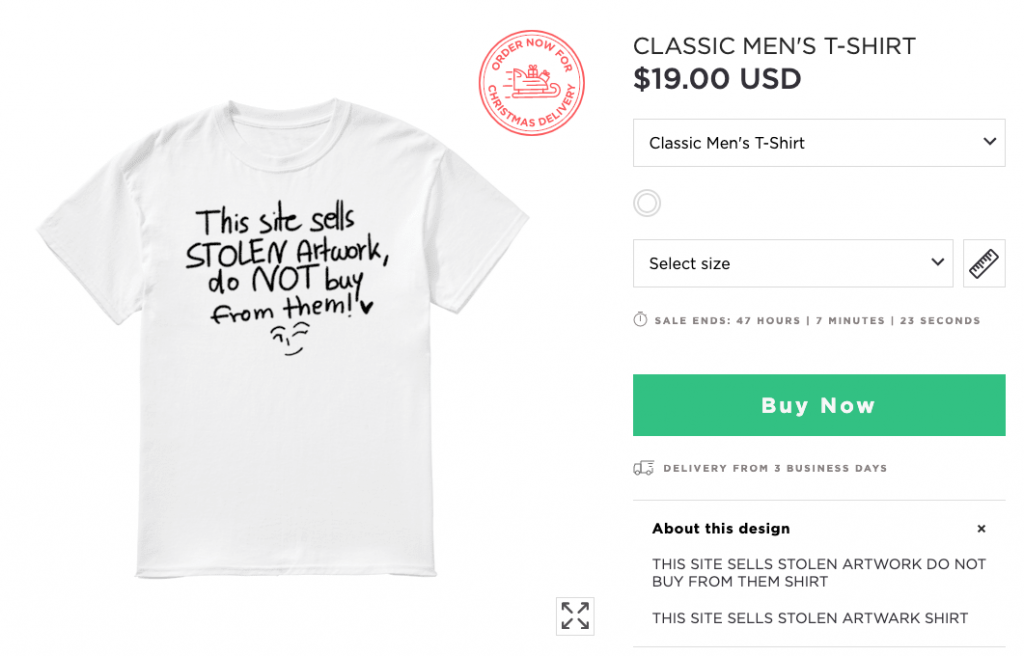
Dozens of Nana’s followers replied, and a few hours later, a Twitter bot replied with a link to the newly-created t-shirt listing on Moteefe, a print-on-demand t-shirt service.
Several other t-shirt listings followed shortly after, with listings on questionable sites like Toucan Style, CopThis, and many more.
Spinning up a print-on-demand stores is dead simple with platforms like GearBubble, Printly, Printful, GearLaunch (who power Toucan Style), and many more — creating a storefront with thousands of theoretical product listings, but with merchandise only manufactured on demand through third-party printers who handles shipping and fulfillment with no inventory.
Many of them integrate with other providers, allowing these non-existent products to immediately appear on eBay, Amazon, Etsy, and other stores, but only manufactured when someone actually buys them.
The ease of listing products without manufacturing them is how we end up with bizarre algorithmic t-shirts and entire stock photo libraries on phone cases. Even if they only generate one sale daily per 1,000 listings, that can still be a profitable business if you’re listing hundreds of thousands of items.
But whoever’s running these art theft bots found a much more profitable way of generating leads: by scanning Twitter for people specifically telling artists they’d buy a shirt with an illustration on it. The t-shirt scammers don’t have the rights to sell other people’s artwork, but they clearly don’t care.
PLEASE RT: Never, ever, EVER respond to someone’s art on Twitter saying you want a shirt with that art. Bot accounts will cue into that and then pirate the artwork. This then becomes a nightmare for the artist to get the bootleg merchandise taken down. PLEASE SHARE.
What responsibility do print-on-demand providers have to prevent infringement on their platforms?
The first question is the hardest: we don’t know. These scammers are happy to continue printing shirts because their identities are well-protected, shielded by the platforms they’re working with.
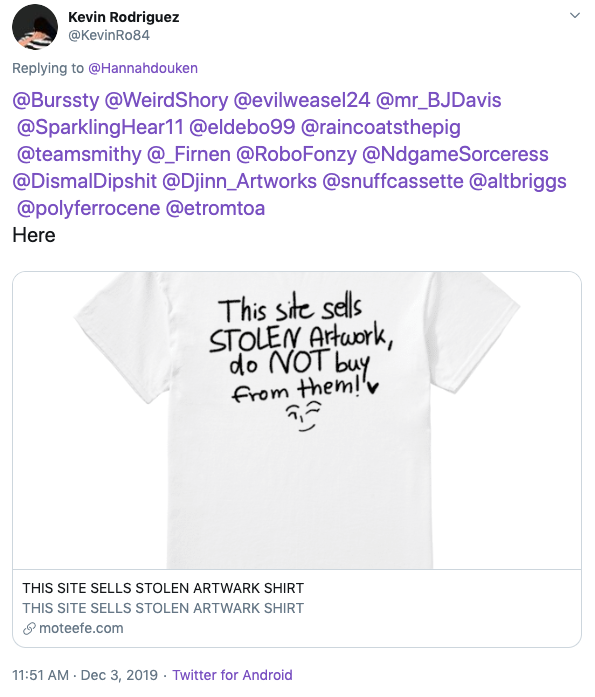
I reached out to Moteefe, who seems to be the worst offender for this particular strain of art theft. Countless Twitter bots are continually spamming users with newly-created Moteefe listings, as you can see in this search.
Unlike most print-on-demand platforms like RedBubble, Moteefe doesn’t reveal any information about the user who created the shirt listings. They’re a well-funded startup in London, and have an obligation not to allow their platform to be exploited in this way. I’ll update if I hear back from them.
Until then, be careful telling artists that you want to see their work on a shirt, unless you want dozens of scammers to use it without permission.
Or feel free to use this image, courtesy of Nakanoart.
So since these art-stealing bots are tracking your text and not reply images, I made this for you guys!
If you want something from ANY creative made into a shirt, you can use this image to tell the artist you want to buy it. So you don’t need to type it out ❤️ pic.twitter.com/E9Mn2GILcb
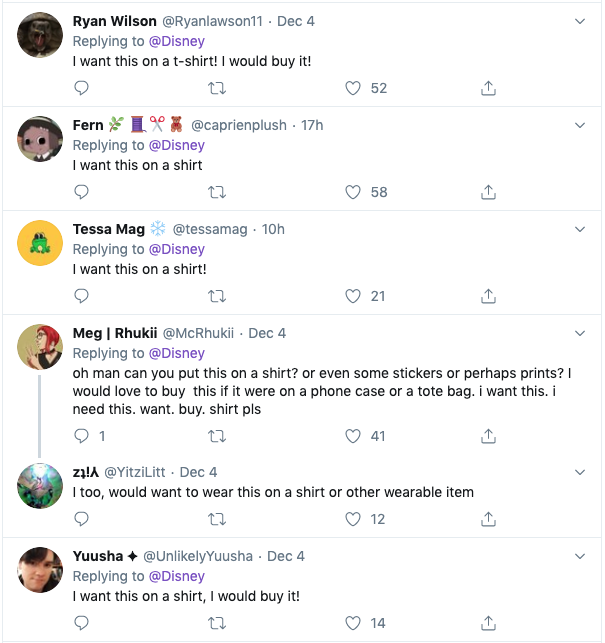
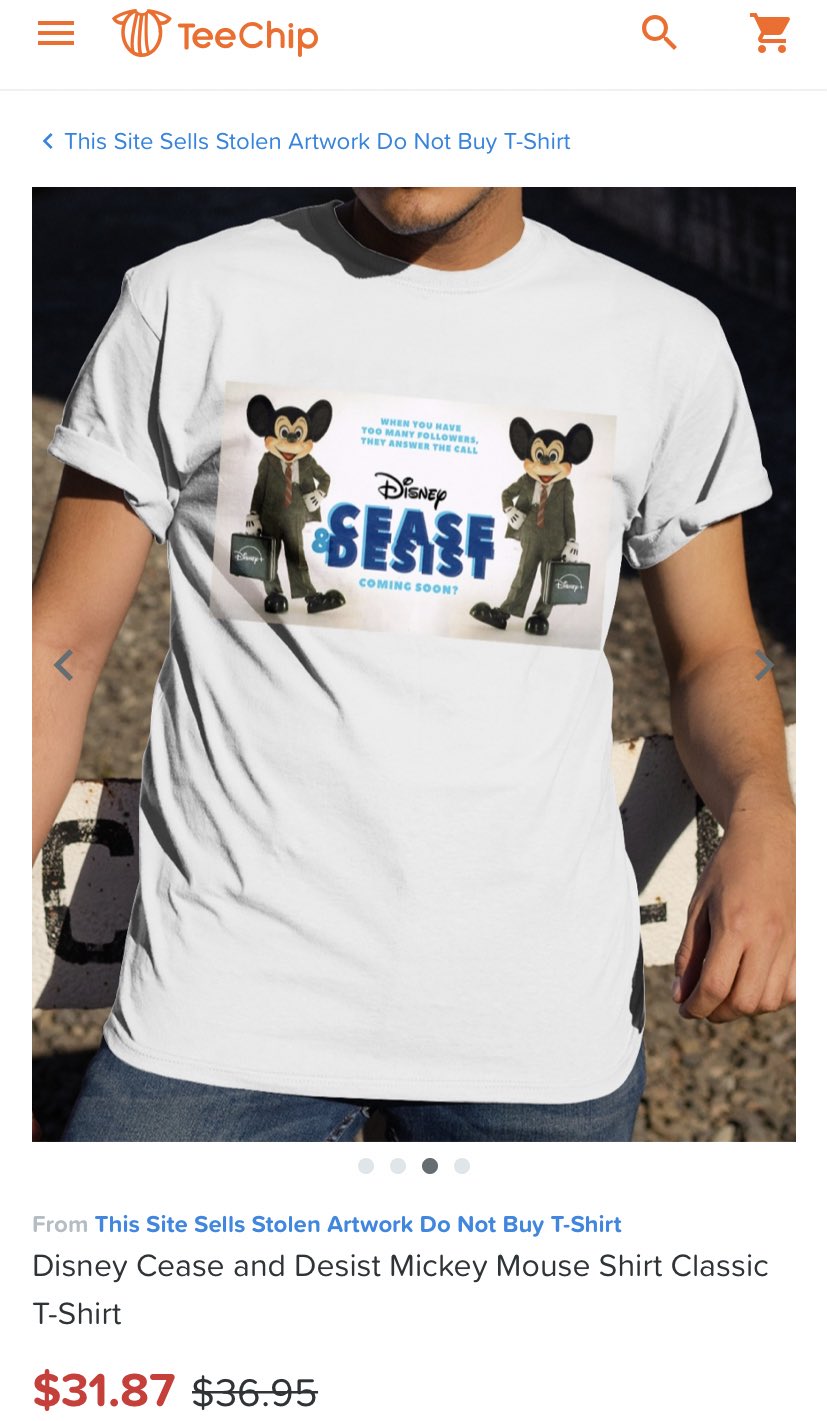
Nearly every reply to the official @Disney account on Twitter right now is someone asking for a shirt. I wonder if their social media team has figured out what’s going on yet.
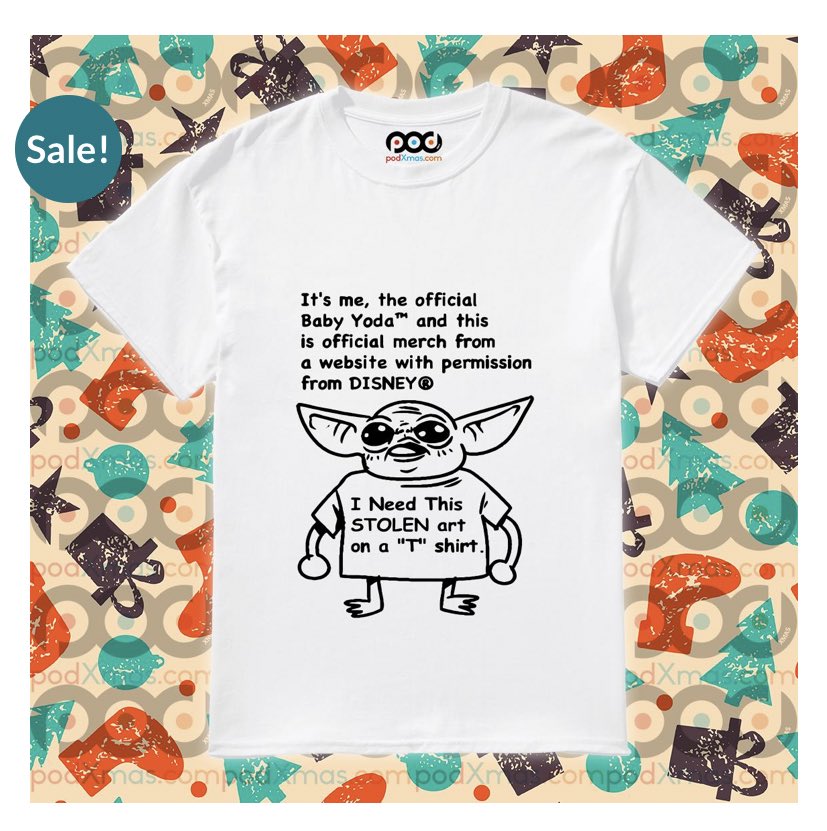
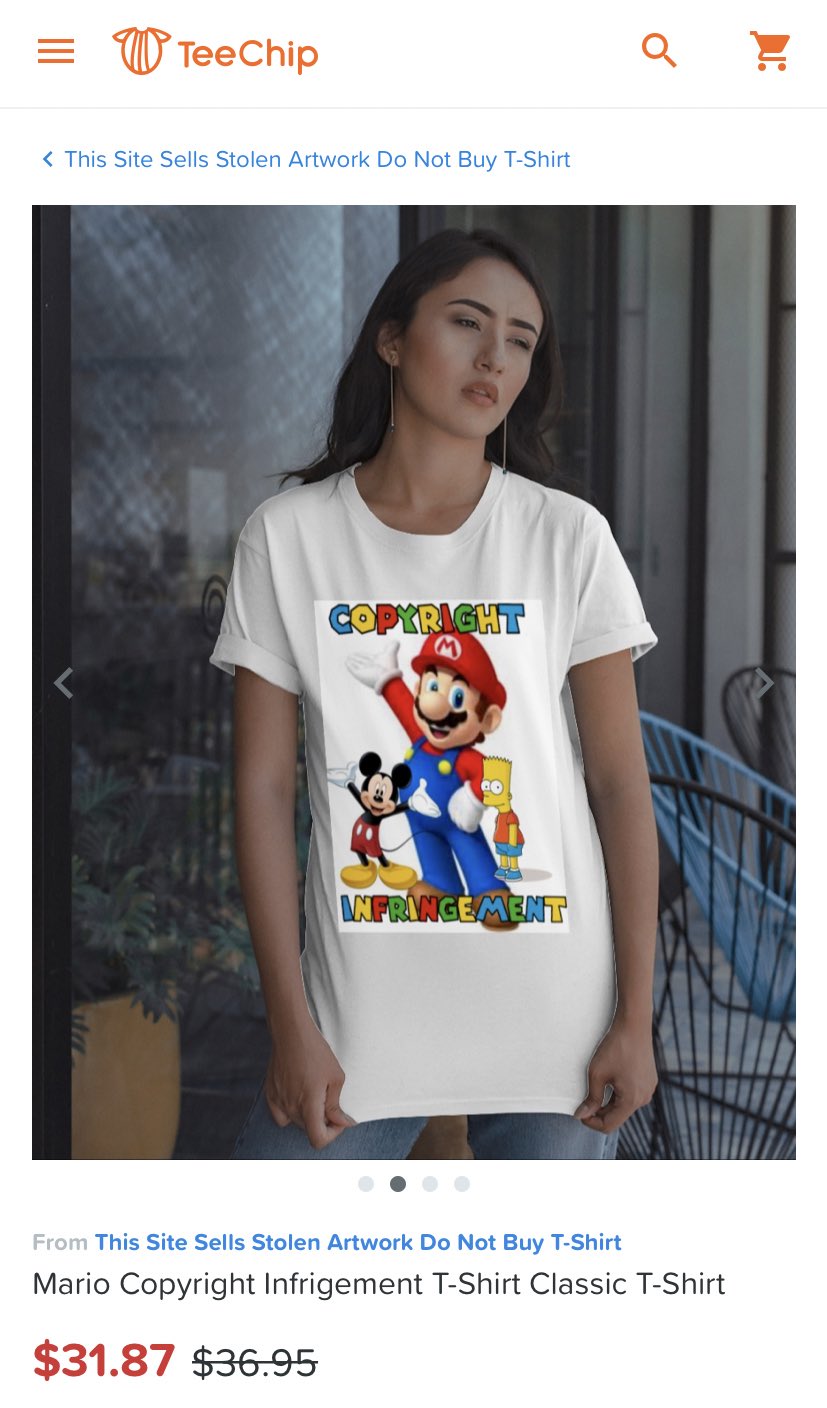
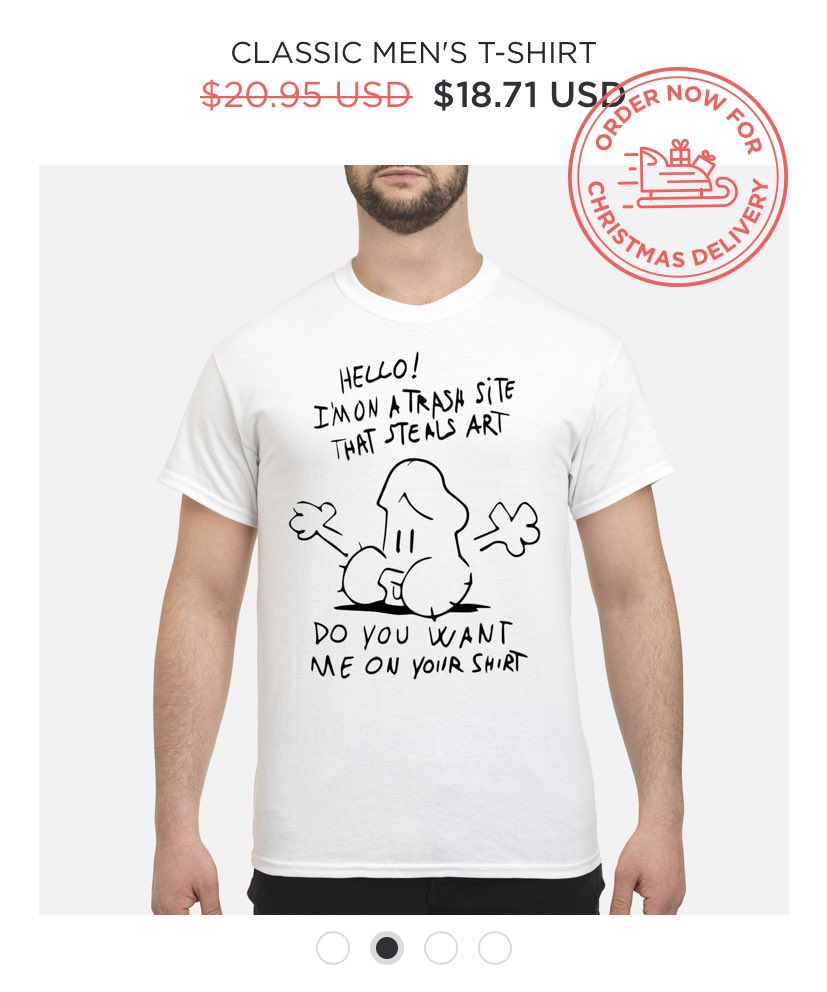
I know I shouldn’t buy them, but some of these copyright troll bait shirts are just amazing.