Robin Sloan on the scale and feedback of social media platforms
— interesting twigbunch on Rosegarden #Run Your Own Social
— Darius Kazemi’s guide to running a small social network for your friends; emphasis on “small” #Profile of 8chan creator, Frederick Brennan
— he should have let it die instead of selling it to this asshole #Mike Davidson on Superhuman’s creepy email tracking
— and more generally, about ethics in technology via @meyerweb #Using machine learning to find public domain Krazy Kat comics
— novel use of AI to search newspaper archives with solid results #How The Shawshank Redemption Humanizes Prisoners
— stunning video essay from Pop Culture Detective‘s Jonathan McIntosh on America’s shifting perceptions of the prison-industrial complex #The Guardian’s Silicon Valley dictionary
— sharply-written modern descendant of Devil’s Dictionary 2.0 via Pinboard #First Look Media ends funding for The Nib, shuts down Topic
— The Nib is going independent, and you can support it here #Panic Announces Playdate
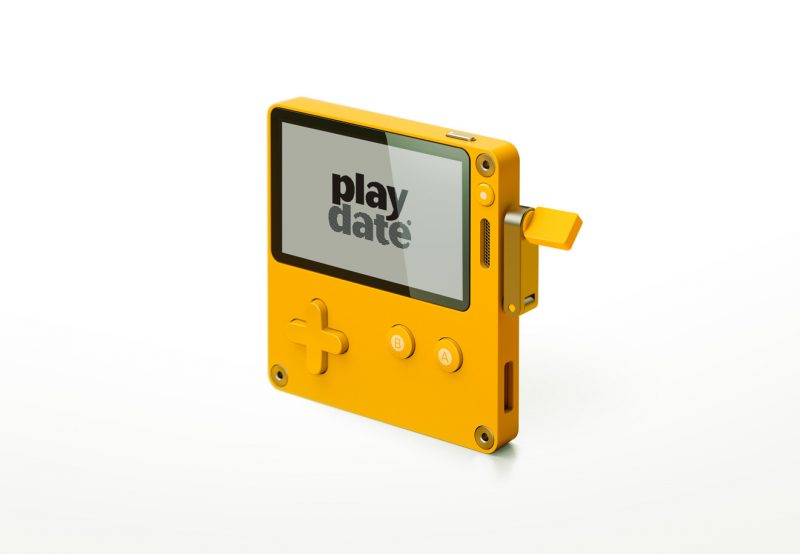
Today, Panic announced Playdate, their lovingly retro-modern handheld gaming system with a lineup of custom-made indie games from some of my favorite game designers in the world.
I’m fortunate enough to know the Panic folks, some of the kindest and most creative people I’ve ever met, and I’ve followed this project over the last few years—almost since its inception.
Designed and engineered in partnership with Teenage Engineering, Playdate features a unique crank in addition to standard directional arrow and button controls, which enables new kinds of experimental gameplay.
Best of all, the game lineup is a complete surprise and comes with the purchase of every Playdate: a dozen secret games released weekly in the first “season,” automatically downloaded to the device every Monday, from a team of all-star indie designers including Keita Takahashi, Bennett Foddy, Zach Gage, and Shaun Inman.
It’s very special, and I’m so excited to see it finally announced after years of secret development. I can’t wait to buy one.
How Lil Nas X used the meme ecosystem to make a #1 hit
— even Taylor Swift can’t top Old Town Road on the charts #Source code released for 45 Infocom games
— critical gaming history including unreleased and unfinished prototypes; more context from Jason Scott via @textfiles #Beto O’Rourke was in Cult of the Dead Cow
— writing gems like this under the handle “Psychedelic Warlord” #Chart Party’s search for the saddest punt
— somehow, against all odds, Jon Bois finds a way to make me interested in football #This Person Does Not Exist
— reload for a new GAN-generated face; see also: This AirBNB Does Not Exist via Belong.io #Netflix launches new podcast with Another Round’s Tracy Clayton
— Strong Black Legends is an instant subscribe #Reflecting on My Failure to Build a Billion-Dollar Company
— remarkably unusual story of how Gumroad’s founder turned a VC-funded startup into a “lifestyle” business via @shl #Dad
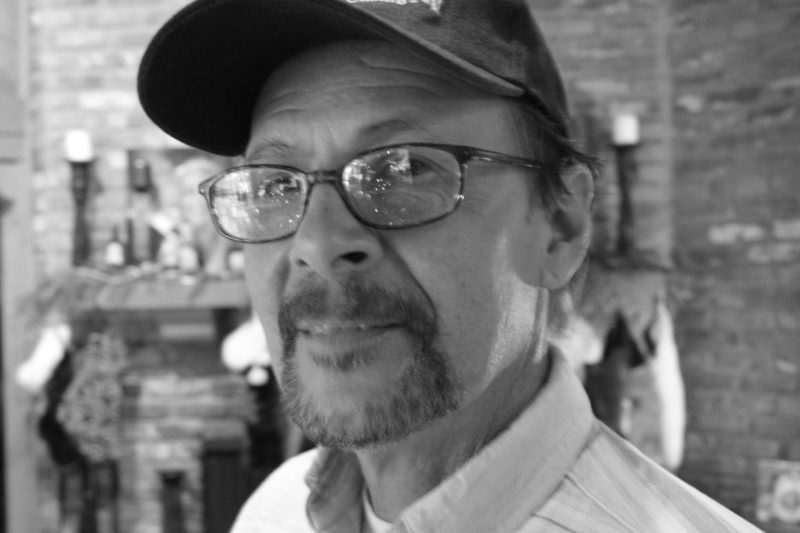
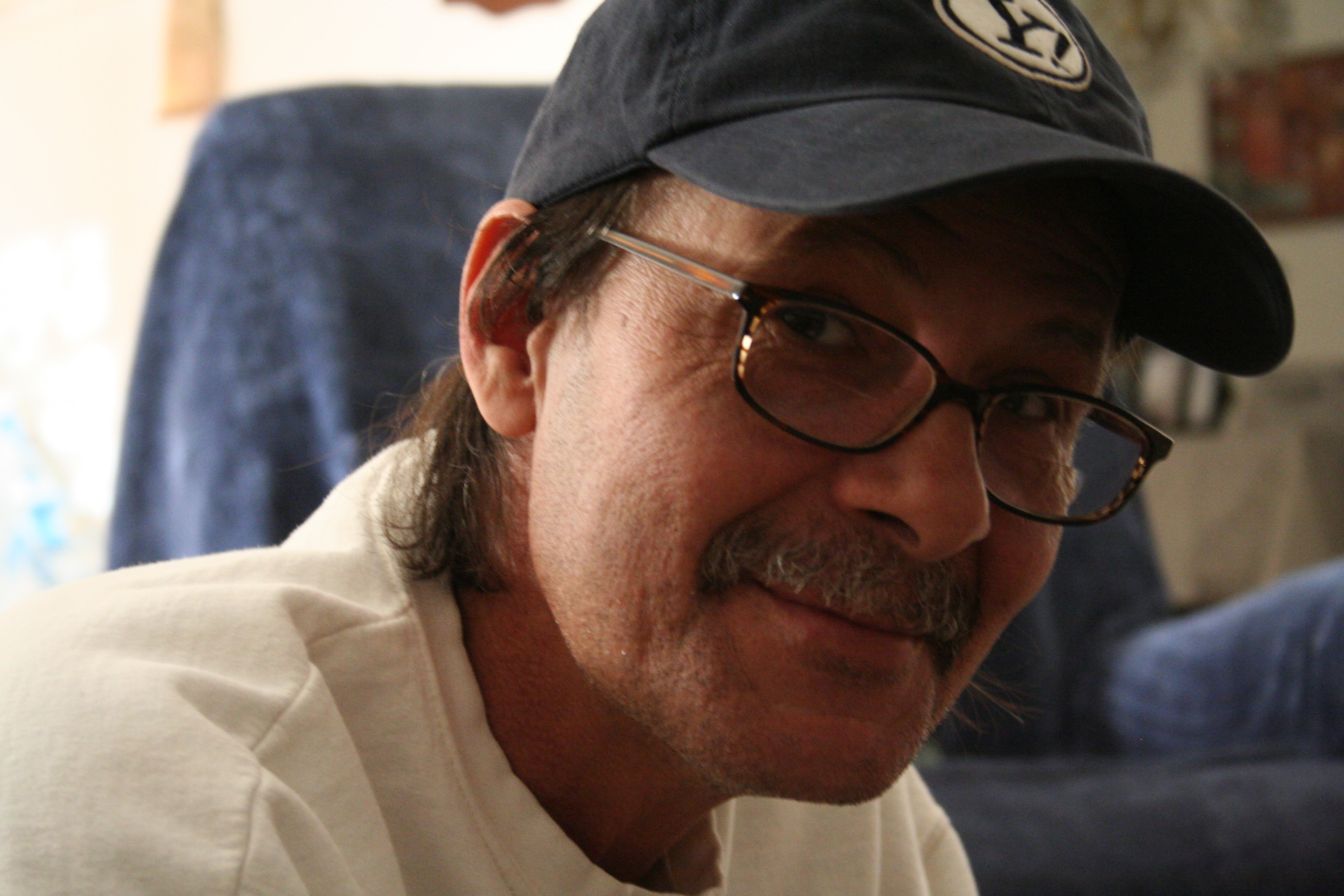
My father passed away on January 24, less than two weeks ago, while my family was still reeling from the news that he had developed Stage IV lymphoma.
I’ve never talked about my dad here before, mostly because I don’t write often about my personal life, but I’ve made exceptions in the past to commemorate and honor the deaths of people who meant a lot to me.
On Saturday, we gathered together at the Catholic church in Burbank where my parents were married and my grandfather’s funeral was held, and we said goodbye to my dad, Stephen Baio.
At the service, I read the eulogy below, which tried to explain why he was special to so many of us. Writing it was easy, at least in part because he wrote the best bits himself. The hard part was reading it.
There are three words I keep hearing over and over again since my dad passed away, when I’m talking to people who knew him — some I know well, some who haven’t seen me since I was a little kid, and some of you that I’d never met before.
Those three words are, “Everyone loved Steve.”
It’s true, everyone loved Steve. To know my dad was to love him.
Stephen Baio was impossible not to like. He lit up a room with a joyful and contagious enthusiasm — sweet and sincere, and genuinely funny. He was unabashedly silly. He laughed at his own jokes and at yours. He made it very easy to love him.
He was generous to everyone he met, whether it was someone he knew for 30 minutes or 30 years. To me, it always felt like he had a hard time saving money because of how much he loved spending it on others.
My dad made people happy, and as long as you’re making yourself and other people happy and you’re not hurting anybody, who cares what anybody else thinks? You’re probably doing the right thing.
My dad taught me the importance of being yourself. Being true to who you are. He taught me the values of loyalty, friendship, and kindness.
And these weren’t lessons that could be spoken: he taught me by how he lived his life, it was central to how he walked through the world, and how over time, you change it by who you touch along the way, in ways big and small.
After he passed away, I went into his bedroom to find some photos for this memorial service.
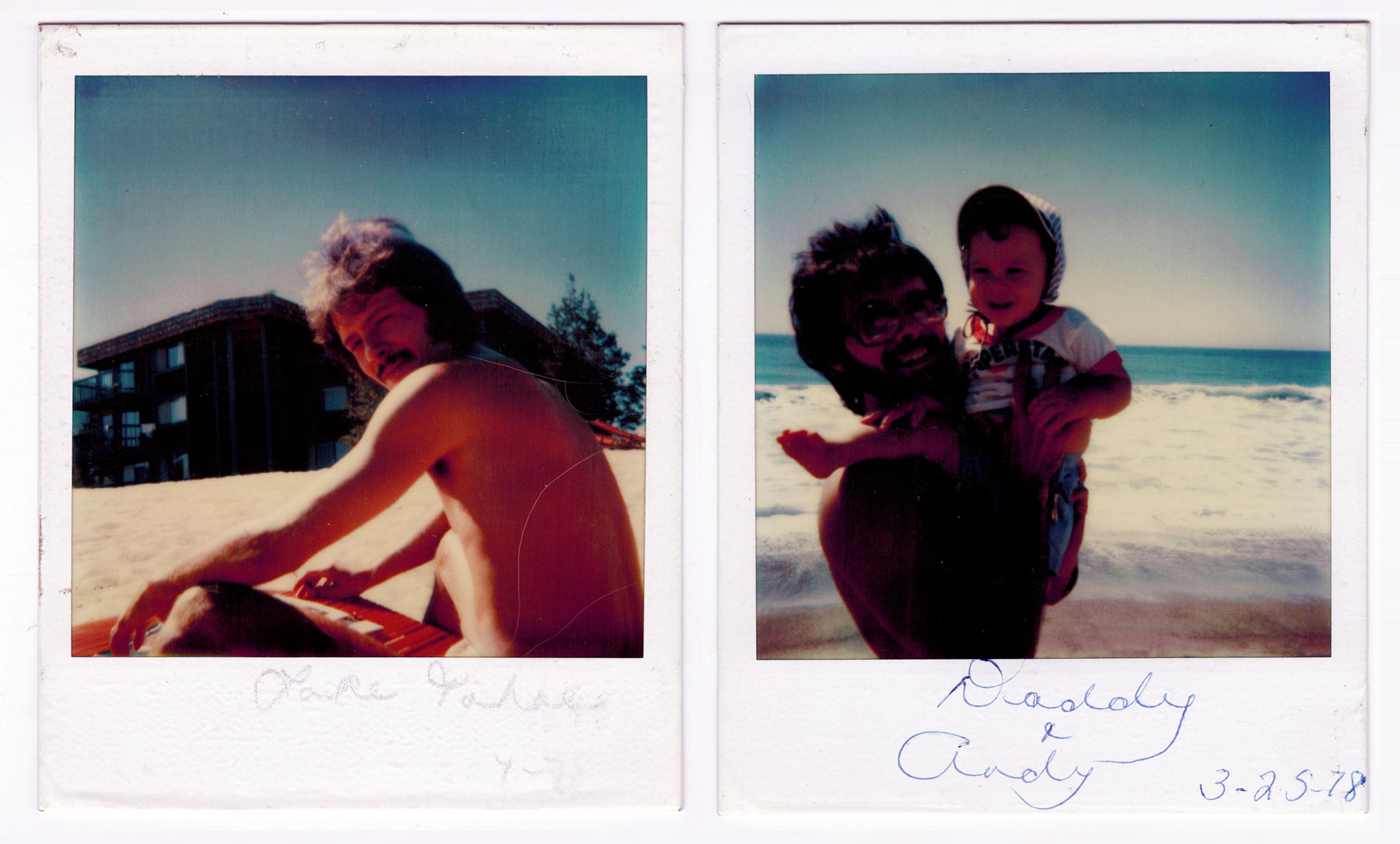
And in one big box, I found photos from his entire life. Photos from his childhood with his mother, Teresa, and with his brother, Anthony, and his late sister, Nicolina, my Aunt Nicki.
I found photos with old friends in the ‘70s, camping in the mountains and just goofing around. Photos from his prom, from parties, from his wedding and with my mom. So many from my childhood, going to Disneyland and the beach, dressing up for Halloweens, Christmases, and Easters long ago. Photos from the tours he went on, traveling with bands or shooting photos of monuments in Tokyo. And later, photos from my own wedding, photos with his grandson.
But after that, I found three more big boxes of the same size, and I was surprised to see them stuffed full of every greeting card, postcard, letter, and memento he ever received. Clippings from newspapers, birth announcements and obituaries, matchbook covers and cassette recordings of long-forgotten conversations. Piles of memories spanning decades, immaculately organized into dozens of manila envelopes, filled to bursting.
It was such a clear reminder how much every one of your friendships and relationships meant to him.
Everyone loved Steve, and you should know without any question or doubt, that he loved you all back.
Seven years ago, my Dad wrote a long handwritten letter, one of thousands he’d written in his life. But this one was special, it was only meant to be read in the event of his passing.
I read it for the first time the day after he died, and I’d like to read from it now.
To Whom It May Concern,
I guess this would be considered my last Will and Testament.
Anyways, whatever it is, these are my wishes, for things to be done whenever I’m gone.
I’m hoping there’s not a lot of things to ask for, I don’t want to be too much of a pain in the ass.
So here goes, I’m writing these things down as I’m writing and thinking.
He goes on to talk about how he wanted his personal belongings distributed or donated. He talks about how he wanted to be cremated, and how he wanted his ashes scattered in the High Sierras, up by Olancha, Mammoth, and June Lakes, places that he loved so much.
He said that he didn’t want an expensive funeral, just a memorial with all of his friends and family through the years — all of you — to come together and have what he called “a nice party.”
He wrote, “I want all the people who meant a lot to me to be there. I’m sure you’ll have a good time.”
I’m going to give my dad the last word, by reading from the end of his will, a message that he addressed directly to all of you — the people who meant so much to him in his life. Here’s what he wrote:
Well, I think that’s about it for now. If I think of anything else, I’ll let you know. (Ha Ha.)
I’ll sure miss you a lot, more than you’ll ever know.
Maybe I’ll see you where ever God decides to send me. I hope there’ll be fishing and pretty girls, good music, my Mom’s Italian spaghetti, and beer.
Thank you all for everything, your love, your friendship, good fun, good laughs and memories, and for the pleasure just to know each and every one of you.
With all my love, now and forever.
Bye for now,
Me
Stephen
Thank you.
Holly Wood’s mega-thread of anonymous dirty secrets in various professions
— fascinating to see people spilling dirt about their respective industries via Boing Boing #Bird Scooters threatens Boing Boing over Cory Doctorow post
— laughable legal claim, with a great response from the EFF #The oral history of the Hampsterdance
— a wild story of copyright, remix, and early web culture via Web Curios #Suck.com, Gone for Good (For Good)
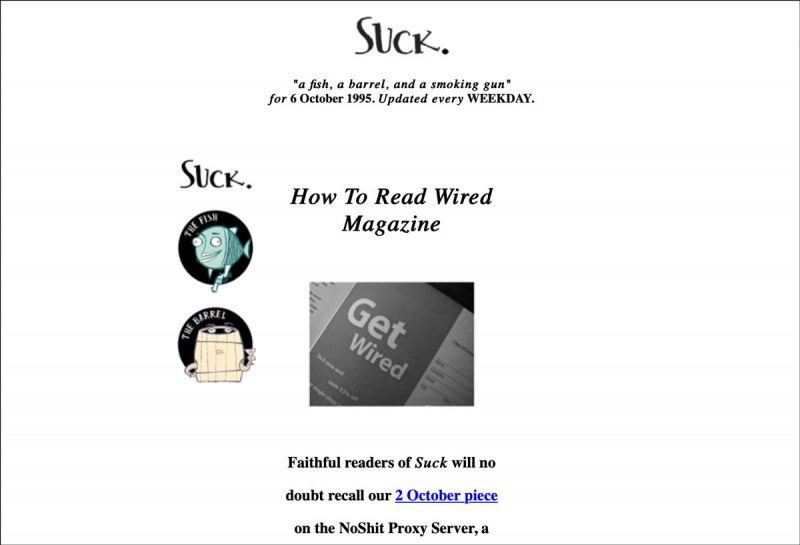
13 years ago, I wrote a post here called “Suck.com, Gone for Good” when the seminal webzine appeared to go offline in December 2005, redirected to a porn search portal.
Fans quickly rallied around it, with some scrambling to put up mirrors and archives, including Suck contributor Greg Knauss and the dearly-missed Aaron Swartz. A few days later, Lycos apparently changed their mind and pointed the domain back to its original server, where it managed to stay for 13 more years.
The site’s had near-death experiences in the past, including some downtime in 2015, but it’s somehow managed to stay online at its original domain for 23 years — more than 17 years after its last column on June 8, 2001.
Three weeks ago, on December 16, 2018, the ownership changed hands from Lycos to a private GoDaddy account. Shortly after that, the Suck.com domain started redirecting to this Weebly account with an “under construction” message.
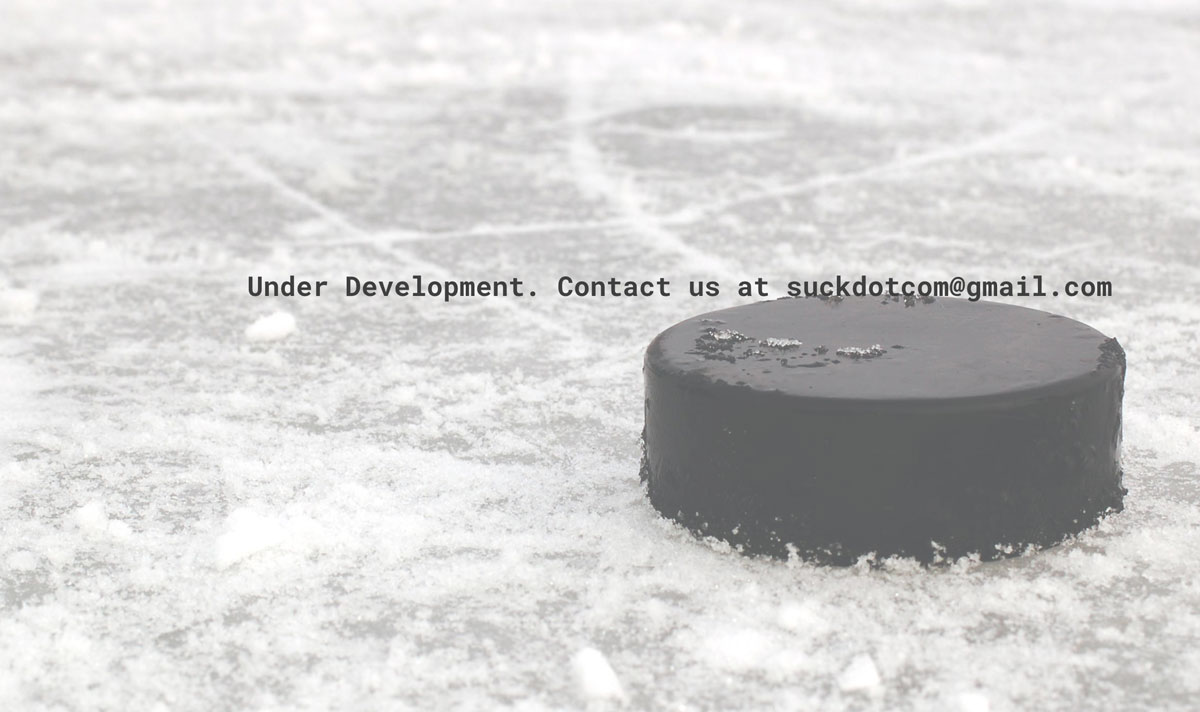
Yesterday, I noticed the content changed, now displaying a series of sports-related polls, and the following greeting:
Welcome to Suck.com. All sports, all the time. Let your voice be heard! You tell us, does it suck or not?
I reached out to the new owners, but no response yet.
Assuming the domain was sold legitimately by Lycos, this permanently spells the end of Suck.com.
For retrospectives on Suck’s role in early web history, these links do a good job:
- Josh Quittner’s 1996 Wired article about the site’s origins.
- Keep Going’s “The Big Fish,” a 2005 retrospective about the impact of “the first great website”
- Engadget’s Nicole Lee interviewed the Suck crew after their appearance at XOXO 2015.
- The Internet History Podcast with Suck founders Carl Steadman and Joey Anuff, and the followup episode.
- In 2016, The Atlantic’s Anna Wiener wrote about “the best magazine on the early web.”
- In 2017, The History of the Web covered “The Web After Suck” in its second post.
If you’re feeling nostalgic, Suck, Again is an ongoing newsletter by Mark Macdonald that emails each column to you, 20 years to the day.
Sadly, every existing link to Suck’s articles and features are now broken, but of course, available in the Wayback Machine.
If you want to keep it alive for a while longer, add the line below to your hosts file and Suck.com links will still work for as long as Lycos keeps the server online.
209.202.254.90 suck.com
Or use Greg Knauss’s proxy, which is live once again at suck.eod.com.
Thanks to Carl Steadman, Joey Anuff, Heather Havrilesky, Tim Cavanaugh, Ana Marie Cox, Terry Colon, Owen Thomas, and every other Suckster for making something special we’re still talking about all these years later.